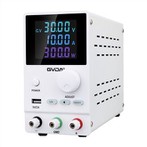
According to the working state of the adjustment tube, we often divide the regulated power supply into two categories: linear regulated power supply and switching regulated power supply. In addition, there is a small power supply that uses a Zener tube.
The linear regulated power supply mentioned here refers to the DC regulated power supply in which the adjustment tube works in a linear state. The adjustment tube works in a linear state, which can be understood as follows: RW (see the analysis below) is continuously variable, that is, linear. In the switching power supply, it is different. The switching tube (in the switching power supply, we generally refer to the adjustment tube as the switching tube) works in two states: on and off: on - the resistance is very small; off - the resistance is very high big. The tube operating in the switching state is obviously not in a linear state.
Linear regulated power supply is a type of DC regulated power supply used earlier. The characteristics of the linear regulated DC power supply are: the output voltage is lower than the input voltage; the response speed is fast, the output ripple is small; the noise generated by the work is low; the efficiency is low (the LDO that is often seen now appears to solve the efficiency problem) ; The heat is large (especially the high-power power supply), which indirectly adds thermal noise to the system.
The variable resistor RW and the load resistor RL form a voltage divider circuit, and the output voltage is:
Uo=Ui×RL/(RW+RL), so by adjusting the size of RW, the size of the output voltage can be changed. Note that in this formula, if we only look at the value change of the adjustable resistor RW, the output of Uo is not linear, but if we look at RW and RL together, it is linear. Also note that our picture does not draw the RW terminal to the left, but to the right. Although there is no difference from the formula, it is drawn on the right, but it just reflects the concept of "sampling" and "feedback" - most of the actual power supplies work in the mode of sampling and feedback Below, the use of feedforward methods is rare, or even used, it is only an auxiliary method.
Let's continue: If we use a triode or field effect transistor to replace the varistor in the figure, and control the resistance of this "varistor" by detecting the magnitude of the output voltage, so that the output voltage remains constant, then we have The purpose of voltage stabilization is achieved. This triode or field effect transistor is used to adjust the voltage output, so it is called an adjustment tube.