Differences Between Clamp Meters and Conventional Multimeters
Clamp meters and conventional multimeters are two common types of electronic measuring instruments, and they differ in structure, functions and applications. This article discusses these differences in detail from several aspects.
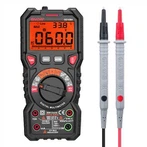
First of all, a clamp meter is a specially designed multimeter. Its main feature is the clamp jaw, which can clamp the wire in the circuit under test without breaking the circuit. This allows voltage, current and other measurements without removing components or disconnecting wires, making the operation convenient, fast and safe. The jaw of a clamp meter is made of metal material and protects the operator from electric shock hazards. By contrast, a conventional multimeter generally requires test leads to be connected into the circuit for measurement, which often means breaking the circuit or removing components. This process is more cumbersome and less safe.
Secondly, clamp meters and conventional multimeters differ in range selection. Conventional multimeters usually have multiple range settings, and users need to manually select the proper range according to the voltage or current to be measured. Clamp meters offer simpler range selection; they automatically select the most suitable range for the clamped circuit for user convenience.
Thirdly, there is a difference in measurement accuracy. Since a clamp meter takes readings by clamping around a conductor, its accuracy is affected by the clamping condition, resulting in relatively lower precision. A conventional multimeter, when connected into the circuit, achieves better contact and delivers more accurate measurement results.
In addition, they differ in function expansion. Conventional multimeters usually support a wide range of measurements including voltage, current, resistance and frequency. Besides these basic functions, clamp meters commonly include extra functions such as temperature, capacitance and power measurement. These optional additional functions can be used as required.
Lastly, they suit different working environments. Conventional multimeters are generally used for precise measurements in relatively fixed locations such as laboratories and factories. Thanks to portability and simple operation, clamp meters are more suitable for on-site measurements, for example, in electrical maintenance, power inspection and other practical field work.
In summary, clamp meters and conventional multimeters differ in structure, functions and applications. Clamp meters feature non-intrusive clamping measurement, auto-ranging, abundant optional extra functions and are suitable for all kinds of field work. Conventional multimeters focus more on high-precision measurement and fixed environments like laboratories. Users can select the proper instrument according to actual requirements and application scenarios.