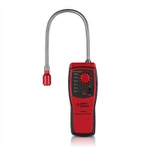
Environmental factors affecting the detection accuracy of combustible and toxic gas detectors
The detection of leaks or concentrations of flammable and toxic gases requires combustible and toxic gas detectors. Combustible and toxic gas detectors are widely used safety assurance instruments in industries such as petroleum, municipal, aquaculture, chemical, production processes, metallurgy, medicine, and environmental protection. They are essential equipment for industrial production safety and environmental hazard source detection.
The factors that affect the detection accuracy of combustible and toxic gas detectors are as follows:
1, Detecting sudden changes in environmental temperature can cause instability in instrument readings. Gas detectors come standard with temperature compensation algorithms to minimize the impact of temperature changes on sensor detection accuracy. However, significant temperature fluctuations can still result in unstable concentration values.
2, Detecting sudden or frequent changes in humidity in the environment, such as entering a humid environment from a dry environment, can affect the internal sensing medium of the sensor, causing a sudden change in gas sensor readings. Combustible and toxic gas detectors come standard with humidity compensation algorithms to reduce the impact of non sudden humidity changes. However, rapid sudden changes can lead to increased display errors in gas sensors and also affect their lifespan.
3, Detecting pressure changes in the environment. When pressure changes dramatically, especially when positive pressure occurs, it can affect the readings of gas sensors and cause instability. This leads to the alarm of combustible and toxic gas detectors.
4, Taking the electrochemical principle of sulfur dioxide detector as an example, it is mainly used to detect the concentration of sulfur dioxide gas in the detection environment. However, it will react with gases such as carbon monoxide, nitrogen dioxide, and ozone. If the concentration of interfering gases such as carbon monoxide, nitrogen dioxide, and ozone in the detection environment is too high, it will affect the accuracy of ozone gas concentration and cause excessive instrument reading errors. Considering this complex situation, when we communicate with customers on site, we will confirm the types of interfering gases that may exist on site, and then add targeted filtering algorithms for interfering gases. Combustible and toxic gas detectors have interference compensation algorithms inside, which can reduce the impact of interfering gases on target gas detection.
5, When high-power equipment is running intermittently in the detection environment, it is inevitable to use high-power devices such as generators, wireless transceivers, compressors, and walkie talkies around combustible and toxic gas detectors, which will affect the detection of combustible and toxic gas detectors. The common manifestation is the occurrence of sudden reading changes and false alarms. Combined with the frequency range that may occur in various complex on-site power equipment, the anti EMC electromagnetic interference circuit developed and designed can filter out the radiation interference of high-power equipment and avoid sudden reading changes and false alarms.