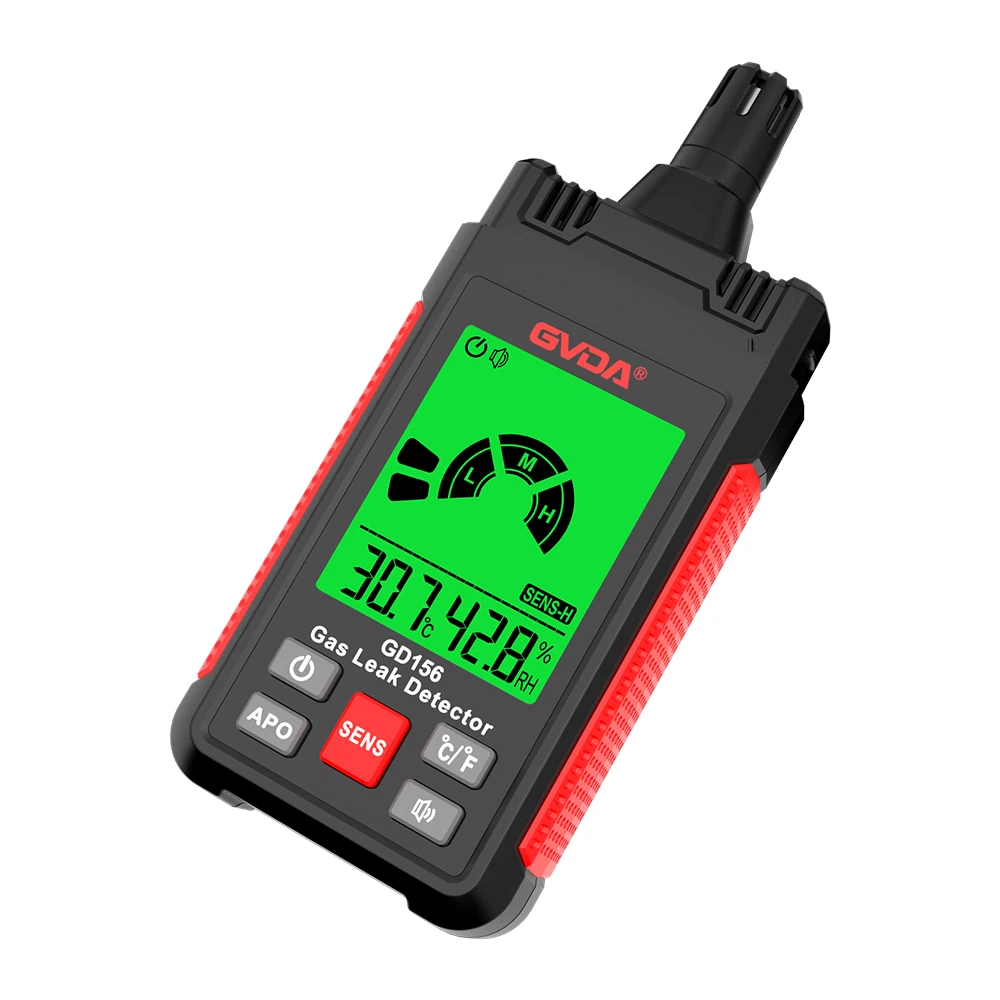
Erratic Readings? Troubleshoot Your Carbon Monoxide Detector!
1, Cause analysis
In terms of environmental factors, the use of industrial production or indoor combustion equipment may lead to unstable carbon monoxide concentration, causing fluctuations in carbon monoxide detector readings. And in high temperature and high humidity environments, the performance of the detector sensor may change, leading to reading deviations or fluctuations.
Due to the inherent factors of the instrument, as the usage time increases, the response ability of the sensor decreases, which may lead to fluctuations in readings. Meanwhile, instrument malfunctions such as circuit failures, unstable power supplies, or damaged components may affect the normal operation of the carbon monoxide detector, resulting in abnormal readings.
2, Solution
In industrial scenarios, it is necessary to optimize production processes to reduce sudden changes in carbon monoxide concentration due to environmental factors; In a home environment, it is necessary to use gas equipment reasonably and maintain sufficient and stable combustion. In addition, the carbon monoxide detector should be installed in an environment with relatively stable temperature and humidity, or equipped with temperature and humidity compensation devices.
Based on the inherent factors of the instrument, the carbon monoxide detector should be calibrated at least once a year to ensure accuracy and stability. At the same time, the instrument should be cleaned regularly, and aging or damaged components should be inspected and replaced. When the sensor ages and causes fluctuations in readings, replace the sensor in a timely manner to ensure the accuracy and reliability of the detection. If the instrument malfunctions, it is necessary to contact professional maintenance personnel for repair to avoid self disassembly and damage.
In summary, the reasons for the fluctuation of carbon monoxide detector readings involve multiple aspects of the environment and the instrument itself. The instability of gas concentration in the environment, changes in temperature and humidity, as well as aging and malfunctions of instrument sensors, can all cause this phenomenon. To address these issues, we can take measures such as stabilizing gas sources, controlling environmental conditions, regular calibration and maintenance, timely replacement of aging sensors, and seeking professional repairs.