FAQ on the basics of using a digital multimeter
1. What is the buzzer function used for?
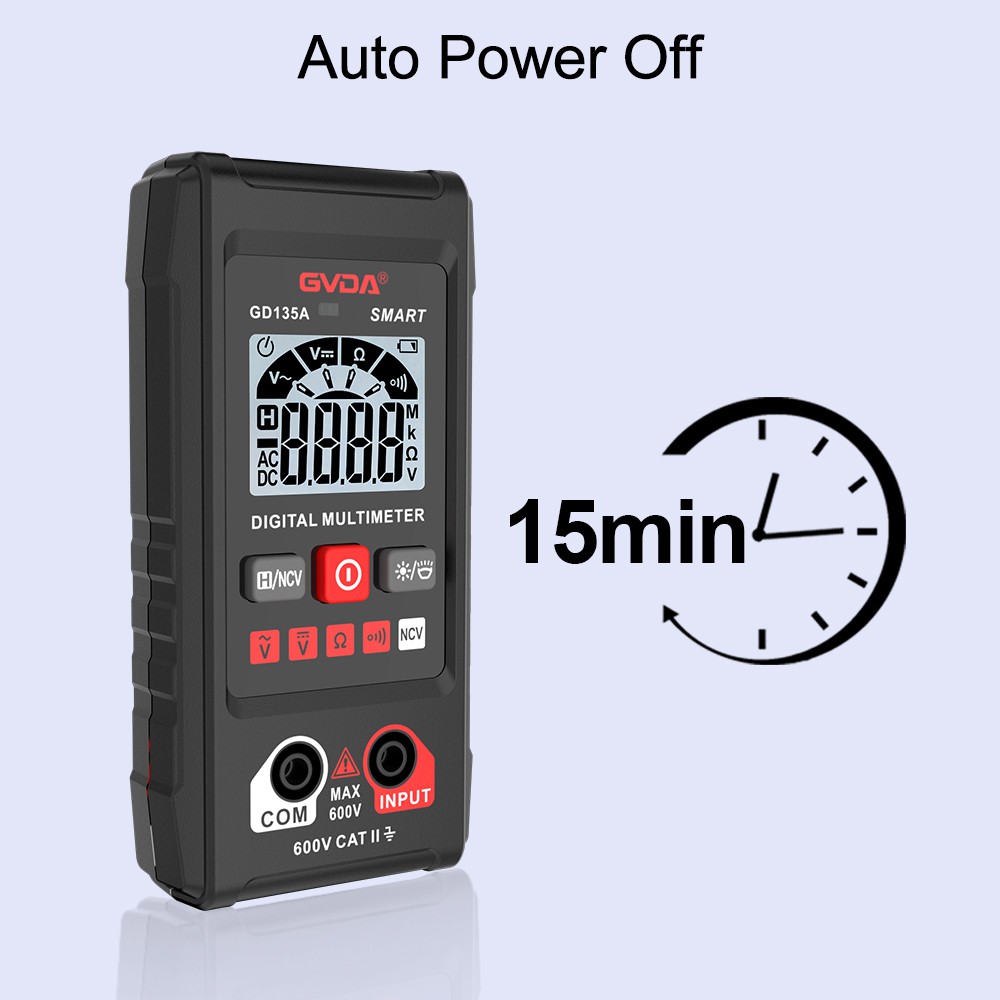
Answer: The buzzer function is an additional feature of the multimeter, usually set to 2K Ω. It is usually used to sound the built-in buzzer when measuring circuits (or resistors) with a resistance of 50 Ω or less. This function plays a significant role in practical applications and can improve the efficiency of measuring circuit continuity. It is an essential function for electronic maintenance.
2. Why does a digital multimeter fail to return to zero when short circuited in the 200 Ω range?
Answer: In the 200 Ω range, due to the resistance of the circuit, instrument internal resistance, and contact points, some tail numbers are normal when short circuited. These tail numbers will become larger during use and cannot be adjusted, but can be reduced by scrubbing the circuit board and tightening the contact points. You can short-circuit it during use, record the value, and subtract it from the measurement.
3. How to determine if a multimeter is good?
Answer: This is a relatively large question, and testing each functional range is a good method. When testing, it is necessary to first find the testing source, but it is generally impossible for users to bring their own standard testing source, so qualitative and slightly quantitative methods can be used for general testing. The basic solution is to find the detection source and use it once according to the instructions.
4. How to calibrate a multimeter?
Answer: Like other measuring instruments, multimeters are calibrated by the manufacturer before leaving the factory. Therefore, if there are no major or obvious problems, please do not adjust them arbitrarily. The current multimeter usually has a voltmeter head, so when calibrating other gears, it is necessary to first calibrate the DC voltage gear, which is called the basic gear by industry insiders. If this gear is inaccurate, almost every gear and function (except for the resistance gear) may be inaccurate. Generally, a multimeter will set one potentiometer (such as DC voltage mode) or multiple potentiometers (such as temperature mode) for each function, and there are also those without potentiometers (such as resistance mode). It's easy to do with potentiometers. Just input the detection signal and adjust it directly; Without a potentiometer, there is usually no misalignment. In case of misalignment, it may be caused by instrument damage or poor circuit contact.
5. How to determine (test) whether the DC voltage range (DCV) of a multimeter is good?
Answer: When testing, the first step is to find the testing source. As we are qualitative with a little quantitative measurement, there are many available testing sources. Household testing sources include 1.5V alkaline/carbon batteries (No. 1, No. 5/AA, No. 7/AAA), 1.2V rechargeable batteries, mobile phone chargers, power adapters, and so on. When testing, turn the multimeter to the desired DC voltage range, insert the probes according to the instructions, connect the testing source, and read the reading on the LCD. As long as the measured value is around the nominal voltage, it is sufficient.