Features and Functions of Gas Detectors
Gas detector is an instrument tool for detecting gas leakage concentration, which can be flexibly configured as a single gas or multiple gas detection instrument. Gas detectors can be equipped with oxygen sensors, combustible gas sensors, toxic gas sensors, or any of four gas sensors or a single gas sensor. They mainly use gas sensors to detect the types of gases present in the environment, in order to detect the composition and content of gases.
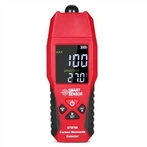
The gas detector adopts high-performance detection components with the advantages of high sensitivity and good repeatability. It uses advanced ultra-low power microcontrollers, and the detector housing is made of high-strength ABS engineering composite anti slip plastic, which has high strength, good hand feel, waterproof, dustproof, and explosion-proof. The gas detector has a very clear large LCD display screen, backlight illumination, and sound and light alarm prompts. The high contrast LCD display screen can continuously display the accumulated concentration of gas in real time, ensuring that dangerous gases can be detected even in very unfavorable working environments and prompt operators to take preventive measures in a timely manner. The gas detector has self checking functions for display, battery, sensor, and sound and light alarm when turned on or needed. The testing program is controlled by an artificial intelligence microcomputer, and the workflow is reasonable, simple and convenient, with complete functions and multiple adaptive capabilities.
The gas detector is controlled by a powerful microprocessor, combined with large-scale digital integrated circuits and low-power components, to convert gas concentration signals in the air into electrical signals, which are displayed intuitively on a LCD screen. It is mainly suitable for on-site detection of hazardous gases in explosion-proof, toxic gas leak rescue, underground pipelines or mines. Gas detectors are widely used in industries such as chemical, smelting, gas, pharmaceutical, municipal, power, fire coal, metallurgy, and power safety testing.