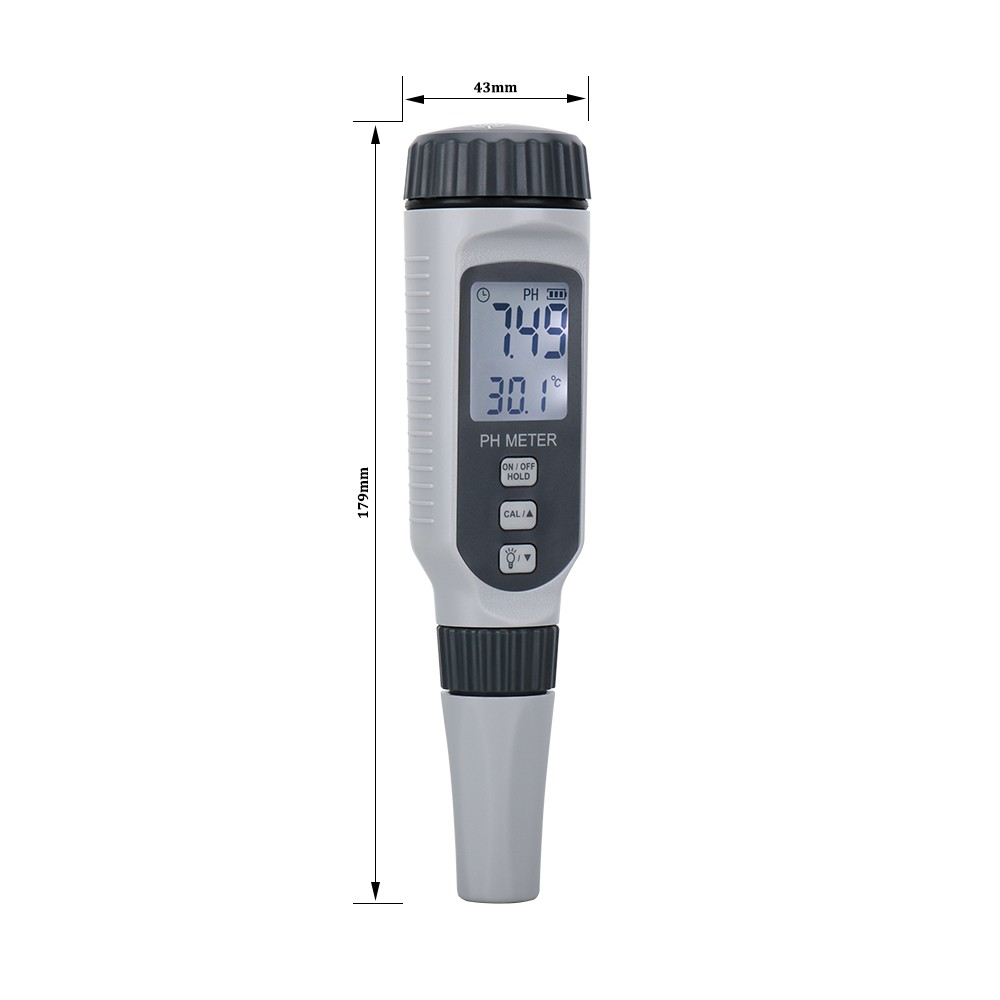
General Inspection Methods for pH Meter Glass Electrodes
1. General inspection methods for glass electrodes
(1) Check the zero potential setting of the pH meter in the "mV" measurement range, insert the glass electrode and reference electrode together into a buffer solution with pH=6.86, and the instrument reading should be approximately -50 to 50mV.
(2) Check the slope: Connect to (1), then measure the mV value of the buffer solution with pH=4.00 or pH=9.18, calculate the slope of the electrode, and the relative slope of the electrode should generally be combined with technical indicators.
Note:
1) The method for checking the zero potential value of electrodes is only applicable to glass electrodes with an equivalent potential point of 7. If the equipotential point of the glass electrode is not 7, it will be different.
2) For some pH meters, when the calibration adjustment can meet the requirements and the above inspection results are not significantly out of range, the electrode can still be used.
3) For some intelligent pH meters, the zero potential and slope values obtained from instrument calibration can be directly viewed.
2. Inspection method for reference electrode
(1) Internal resistance inspection method: A laboratory conductivity meter is used. One end of the conductivity meter electrode socket is connected to a reference electrode, and the other end is connected to a metal wire. The reference electrode and the metal wire are immersed in the solution at the same time. The measured internal resistance should be less than 10k Ω. If the internal resistance is too high, it indicates that there is a blockage at the liquid interface and should be treated.
(2) Electrode potential inspection: Take a good reference electrode of the same model and connect it to the input terminals of the pH meter along with the measured reference electrode. Then insert KCl solution (or pH=4.00 buffer solution) at the same time. The measured potential difference should be -3~3mV, and the potential change should be less than ± 1mV. Otherwise, the reference electrode should be replaced or regenerated.
(3) Appearance inspection: The silver chloride wire should appear dark brown. If it appears grayish white, it indicates that the silver chloride has partially dissolved.