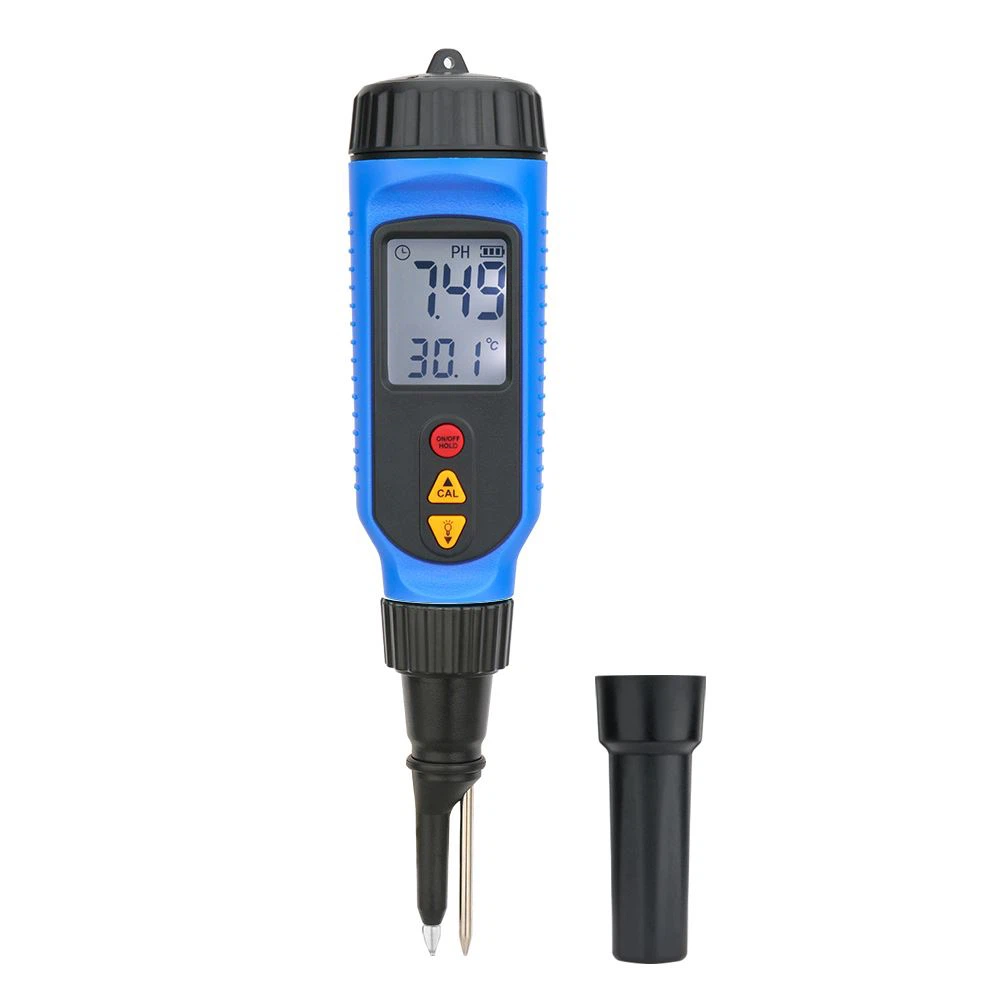
How a pH Meter Works
A pH meter is a potentiometric method for measuring the pH of a solution. The main components of the pH meter involved in the measurement are the glass electrode and the reference electrode. The glass electrode is sensitive to pH, while the potential of the reference electrode is stable. Putting the two electrodes of the pH meter together in the same solution constitutes a galvanic cell, and the potential of this galvanic cell is the algebraic sum of the potentials of the glass electrode and the reference electrode.
The reference electrode potential of the pH meter is stable, then when the temperature remains stable, the potential change of the galvanic cell composed of the solution and the electrode is only related to the potential of the glass electrode, and the potential of the glass electrode depends on the pH of the solution to be measured. Therefore, by measuring the change in potential, the pH value of the pH solution can be obtained.