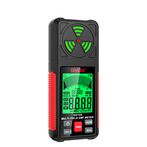
How should the calibration and calibration of a gas detector be carried out?
Under normal circumstances, a gas detector needs to be calibrated once a year. For those with stricter requirements for the accuracy of the detection instrument, calibration may even be carried out every six months or every three months. The more frequently the calibration is done, the less likely the detector is to experience drift, and the better the detection effect will be.
For the calibration of a gas detector, a zero gas and a standard gas can be used to calibrate the instrument first. The instrument will store the obtained standard curve. When the gas detector is working in the measured environment, it will compare the signal generated by the concentration of the measured gas with the standard curve stored during calibration, and then calculate the concentration value of the measured gas through calculation.
Zeroing the instrument at any time and regularly calibrating the instrument are essential tasks to ensure the accuracy of the instrument's measurement. It should be noted that although many gas detectors can currently replace the detection sensors, this does not mean that a detector can be equipped with different detector probes at any time. Whenever the probe is replaced, in addition to the necessary activation time for the sensor, the gas detector must also be recalibrated. In addition, it is recommended that before using various types of instruments, corresponding tests be carried out on the instruments using standard gases to ensure that the gas detector truly plays a protective role.
If in an open area, such as an open workshop, using this type of instrument as a safety alarm, a portable diffusion gas detector can be used, because it can continuously, real-timely, and accurately display the concentration of toxic and harmful gases at the site.