How to Adapt the Observation Magnification of a Stereomicroscope to Different Requirements
Stereomicroscopes are used for the stereoscopic inspection and observation of electronic components, circuit boards, turning tools, magnets and other items. To observe these objects at different magnifications, adjustments can be made in several aspects: a. mechanical performance; b. light source selection; c. optical performance; d. video observation to satisfy these diverse requirements.
a. Mechanical performance: For applications such as welding, assembly, inspection of large circuit boards, and scenarios with special working distance requirements, the demands can be met by adjusting mechanical components, such as directional brackets, support stands and large moving stages. Relying on their mechanical features, large specimens can be inspected directly on the bracket and stage without moving the test object.For example, Company A needed to perform detailed tilted observation on relatively large circuit boards, which were difficult to move. The requirement was fulfilled by adjusting the mechanical movement to tilt the directional bracket.
b. Light source illumination: Light source illumination plays a vital role in whether the specimen can be seen clearly. When selecting an illumination scheme, choose lighting tools and lighting modes according to the characteristics of the specimen (including its light requirements, reflectivity, etc.). If the built-in transmitted and oblique illumination of a standard stereomicroscope cannot meet the illumination demands, optional accessories such as LED cold light sources, ring lights, single or dual-branch fiber optic lights are available.
c. Optical performance: For the issue of adjusting magnification and field of view, different eyepieces and objective lenses can be selected. To achieve higher magnification, replace with high-magnification eyepieces and objective lenses. For a wider field of view, use objective lenses with lower magnification or wide-field eyepieces.
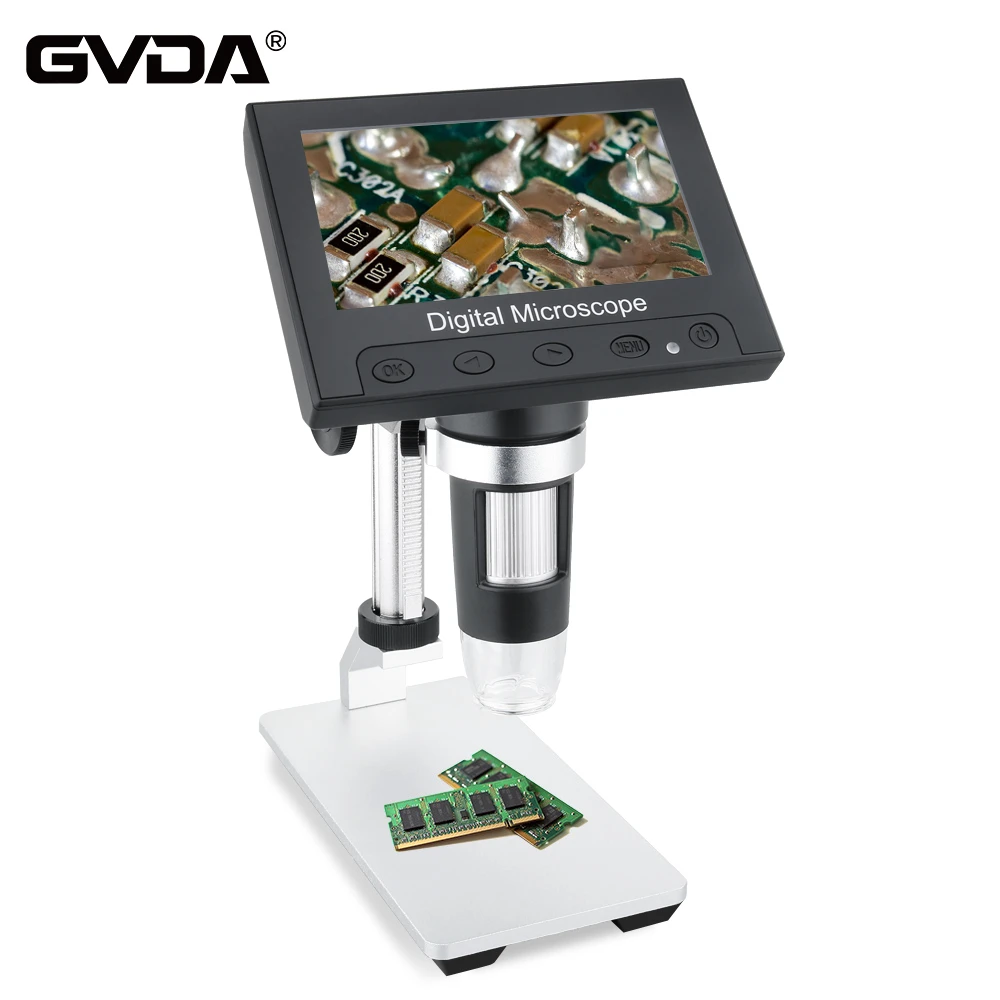
d. Video observation: When the optical magnification is insufficient, video magnification can be used. If simultaneous viewing and image storage are required, a video option can be adopted. Multiple video modes are available: 1. direct monitoring via a display; 2. connection to a computer (via a digital CCD or analog CCD image capture card); 3. connection to a digital camera (compatible interfaces and matching microscope accessories are required for different digital cameras).