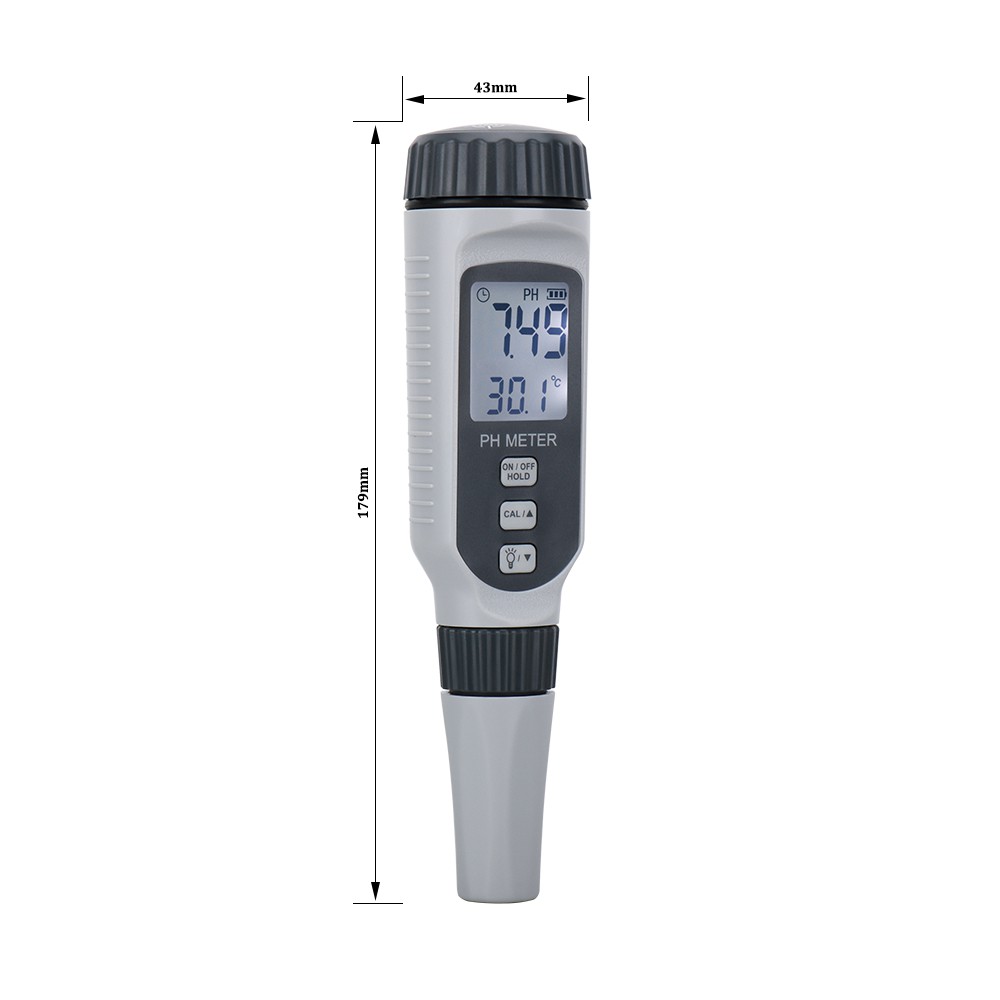
How to Calibrate a pH Meter by Three-point Method
For the calibration done with 7.004.01, if a third point is needed, which buffer should be used, 9.21 or 10.01, 9.18, 12.46, 1.68, etc? How to determine?
1. Actually, the third point correction for pH mainly depends on the condition of your sample. As you said, there are many types of calibration solutions ranging from pH 1.68 to 12.46, and the appropriate calibration solution should be selected based on the final pH range of the sample. We commonly use 4.00, 6.86, and 9.18. If your sample is more alkaline, we need 9.18, 10.01, and 12.46. The calibration sequence varies depending on the condition of different instruments. Some require calibration in order, while others do not. The instrument will automatically recognize it and you need to refer to the relevant instrument user manual.
2. No matter what kind of pH meter it is, pH=7 must be calibrated, and when calibrating at two points, pH=7 must be calibrated first. When performing calibration, starting from 7.0, the selected standard solution is related to the pH value of the solution to be measured, so that the pH value of the solution can fall within the calibrated pH range. Generally, two points are sufficient to meet the requirements, and only the third point is considered if the requirements are high. Some instruments can calibrate three points and have a mode to choose from, which can be used directly. Some do not have it, usually using two-point proofreading, that is, proofreading twice.
3. We usually use a calibration order of 7, 4, and 10. First calibrate the acid, then calibrate the alkali.
So how to activate and calibrate a pH meter that has been idle for a long time and the electrodes are not placed in protective solution? What should I pay attention to? How to prepare standard calibration solution? What are the details to pay attention to when using a pH meter?