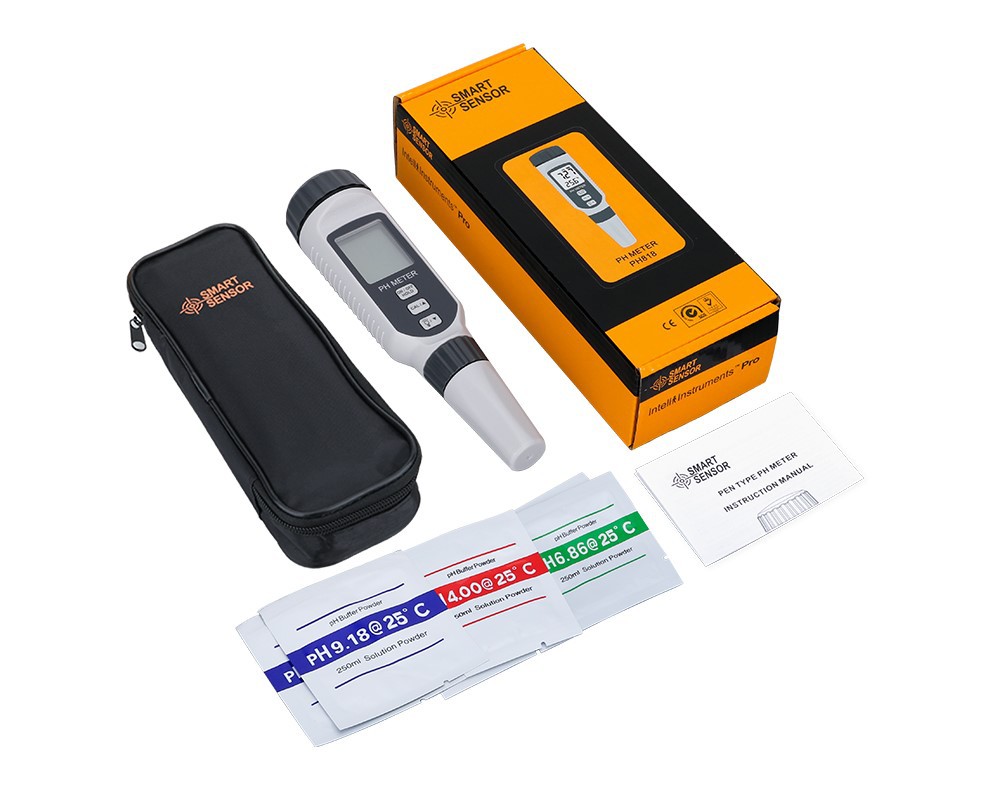
Introduction to Precautions for Using a pH Meter
1. In general, pH meters should be calibrated once a day during continuous use; Generally, the instrument does not need to be calibrated again within 24 hours.
2. Before use, pull down the rubber sleeve on the upper end of the pH meter electrode to expose the small hole at the upper end.
3. The calibration buffer solution is generally used for the first time with a pH of 6.86, and for the second time with a buffer solution close to the pH value of the measured solution. If the measured solution is acidic, the buffer solution should be selected with a pH of 4.00; If the tested solution is alkaline, choose a buffer solution with pH=9.18.
4. When measuring, the lead wire of the electrode should be kept stationary, otherwise it may cause measurement instability.
5. The electrode should not be soaked in distilled water. If the electrode used in the pH meter is a new electrode or an electrode that has not been used for a long time, it must be soaked in distilled water for several hours before use, so that the asymmetric potential of the pH meter electrode can be reduced to a stable level, thereby reducing the internal resistance of the electrode.
6. When measuring pH value with a pH meter, it is necessary to ensure that the electrode bubbles completely enter the measured medium in order to obtain more accurate measurement results.
7. When using a pH meter, it is necessary to remove the rubber stopper at the reference electrode point for adding solution, so that the reference electrolyte can withstand gravity