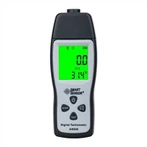
How to choose a digital multimeter? Digital multimeter selection skills Daquan
Regarding the selection method of the digital multimeter, choose the appropriate digital multimeter from the aspects of the multimeter's function, range and range, accuracy, input resistance and zero current, as well as the working voltage and resistance wiring method.
How to choose a digital multimeter
There are two types of digital multimeters: portable and desktop: portable, small in size, light in weight, and low in power consumption, suitable for industrial sites; desktop meters have very high accuracy and resolution, and are used as standard meters and precision measurement in metrology, scientific research and production departments. .
The selection of a digital multimeter is generally considered from the following aspects:
1. Function: In addition to the five functions of measuring AC and DC voltage, AC and DC current, resistance, frequency, etc., the current digital multimeter also has recording function, data retention, relative mode, tolerance comparison, diode detection, dBm/dBv Test, IEEE-488 interface or RS-232 interface and other functions should be selected according to specific requirements.
How to choose a digital multimeter 1
2. Range and range: The digital multimeter has many ranges, and the basic range has the highest accuracy. Many digital multimeters have automatic/manual range selection, making measurements convenient, safe and fast. There are also many digital multimeters with over-range capability. When the measured value exceeds the range but has not reached the maximum display, it is not necessary to change the range, thereby improving the accuracy and resolution.
3. Accuracy: The maximum allowable error of a digital multimeter depends not only on its accuracy, but also on its accuracy.
How to choose a digital multimeter 2
Fourth, input resistance and zero current: The input resistance of the digital multimeter is too low and the zero current is too high, which will cause measurement errors. The key depends on the limit value allowed by the measuring device, that is, the internal resistance of the signal source. When the signal source impedance is high, an instrument with high input impedance and low zero current should be selected so that its influence can be ignored.
5. Series-mode rejection ratio and common-mode rejection ratio: When there are various interferences such as electric field, magnetic field and various high-frequency noises or when performing long-distance measurements, it is easy to mix interference signals, resulting in inaccurate readings, so it should be based on the use environment. When choosing an instrument with a high serial-to-common-mode rejection ratio, especially when performing high-precision measurements, you should choose a digital multimeter with protection terminal G, which can well suppress common-mode interference.
6. Display form: The display form of the digital multimeter is not limited to numbers, but can also display charts, text and symbols, and some new instruments can also display multiple parameters of the same signal at the same time to facilitate on-site observation, operation and management.
How to choose a digital multimeter 3
7. Working voltage: The power supply of desktop digital multimeters is generally 220v, and some new digital multimeters have a wide power supply range, which can be between 96v and 264v. Handheld digital multimeter available with AC
Electric, rechargeable battery or external battery in three forms.
How to choose a digital multimeter 4
8. Response time, measurement speed, frequency response: the shorter the response time, the better, but some meters have a relatively long response time, and the reading can be stabilized after a period of time; the measurement speed should be based on whether it is used in conjunction with the system test, such as When used in combination, the speed is very important and must be matched with the entire system; the frequency response is selected reasonably according to the measured signal.
9. True RMS measurement: AC voltage measurement is divided into average value conversion, peak value conversion and true RMS conversion. When the waveform distortion is large, the average value conversion and peak value conversion are inaccurate, while the true RMS conversion can not be affected by the waveform, so that the measurement results are more accurate.
How to choose a digital multimeter 5
10. Resistance wiring method: There are four-wire and two-wire wiring methods for resistance measurement. When making small resistance and high-precision measurements, you should choose a meter with four-wire resistance measurement.