How to choose a gas detector in a coal mining area?
Gas detectors are widely used in gas detection work in daily life. Different types of gas detection instruments are generally used in different situations. Because in different occasions, for safety reasons and to adapt to special testing requirements, it is necessary to choose a suitable detector. Well, China's mining industry is also found in many areas. What kind of gas detector is generally chosen in coal mining areas?
We may have heard of gas, which generally appears in coal mining areas, especially when coal mining is taking place. Therefore, in coal mining areas, there are generally a lot of alkane gases such as methane. They are less toxic, but they are dangerous to burn.
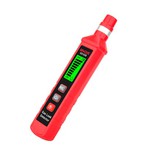
In the mining industry, the safety of miners' lives is very important. They work hard every day, so they must choose a gas detector suitable for the coal mining environment. The combustible gas detector is suitable for such a special environment.
The combustible gas detector is a gas detector suitable for coal mine areas. This instrument has fast detection speed, accuracy and is easy to use. Its detection principle is also very simple, and at the same time, it is also very convenient to maintain.
Therefore, coal mining areas must choose combustible gas detectors that can protect workers' lives. Safety in construction is important.
Concentration and operating time requirements for gas on-site operations (excluding confined spaces):
When the concentration of CO in the air is 24ppm, it can operate normally;
When the concentration of CO in the air is 40ppm, it can work for 1 hour;
When the concentration of CO in the air is 80ppm, it can work for half an hour;
When the concentration of CO in the air is 160ppm, it is only allowed to work for 15 to 20 minutes, and the interval between each work is 2 hours.
Oxygen operation: The ambient oxygen content in the working area shall not be less than 19.5%. The oxygen content in limited spaces is generally 19.5% to 21%. In an oxygen-rich environment, it shall not be greater than 23.5%.