How to distinguish between ultrasonic thickness gauges and coating thickness gauges
Principle of coating thickness measurement
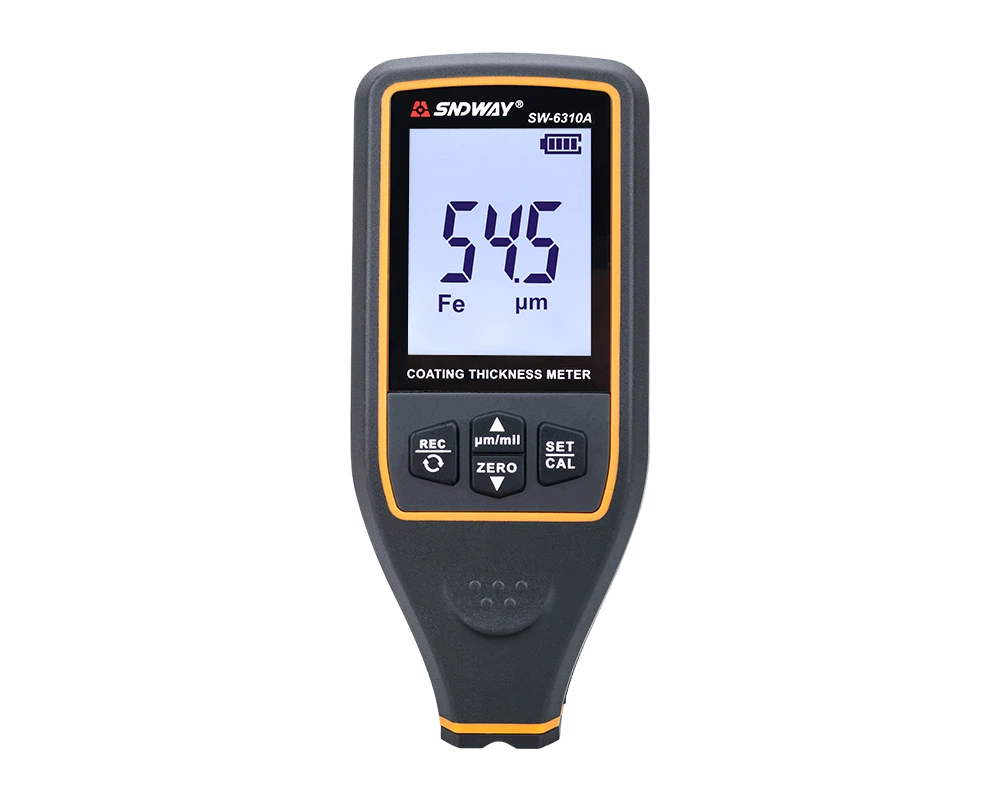
The thickness of the plating (plating) layer is measured by the electromagnetic induction method. A probe on the surface of the element creates a closed magnetic circuit. With the change of the distance between the probe and the ferromagnetic material, the magnetic circuit will change to different degrees, causing the magnetic resistance and inductance of the probe coil to change. This principle can be used to measure the distance between the probe and the ferromagnetic material, that is, the thickness of the plating (plating).
The main purpose of coating thickness gauge:
Widely used in machinery, automobile, shipbuilding, petroleum, chemical, electroplating, spraying, enamel, plastic and other industries. It can easily and non-destructively measure the thickness of non-magnetic coatings on ferromagnetic materials, such as zinc, copper, chromium and other coatings on steel surfaces or coatings such as paint, enamel, glass fiber reinforced plastic, spray plastic, asphalt, etc.
Principle of Ultrasonic Thickness Gauge:
Ultrasonic thickness gauges are also thickness gauges. It mainly uses the principle of ultrasonic pulse reflection method to measure the thickness of materials and objects conveniently and quickly, and realize the most basic detection function.
Usage of Ultrasonic Thickness Gauge
1. Manufacture and stamping of metal parts, such as parts made of aluminum, steel, copper, bronze
2, machining workpiece
3, chemical etching components
4, metal strips, metal plates
5, glass, plastic and composite materials
6. Pipelines, pressure vessels, gas cylinders, storage tanks, chemical processing vessels
7, material handling system, pump
8. Bridge, hull, crane, shipbuilding equipment and steel structure engineering
Ultrasonic thickness gauge mainly detects hard materials (such as steel plates, glass, etc.), but cannot measure soft materials (such as sofas, sponges, etc.). When testing materials, pay attention to the sound speed of the material to be measured. The speed of sound used by the material is different, please refer to the product manual for details.