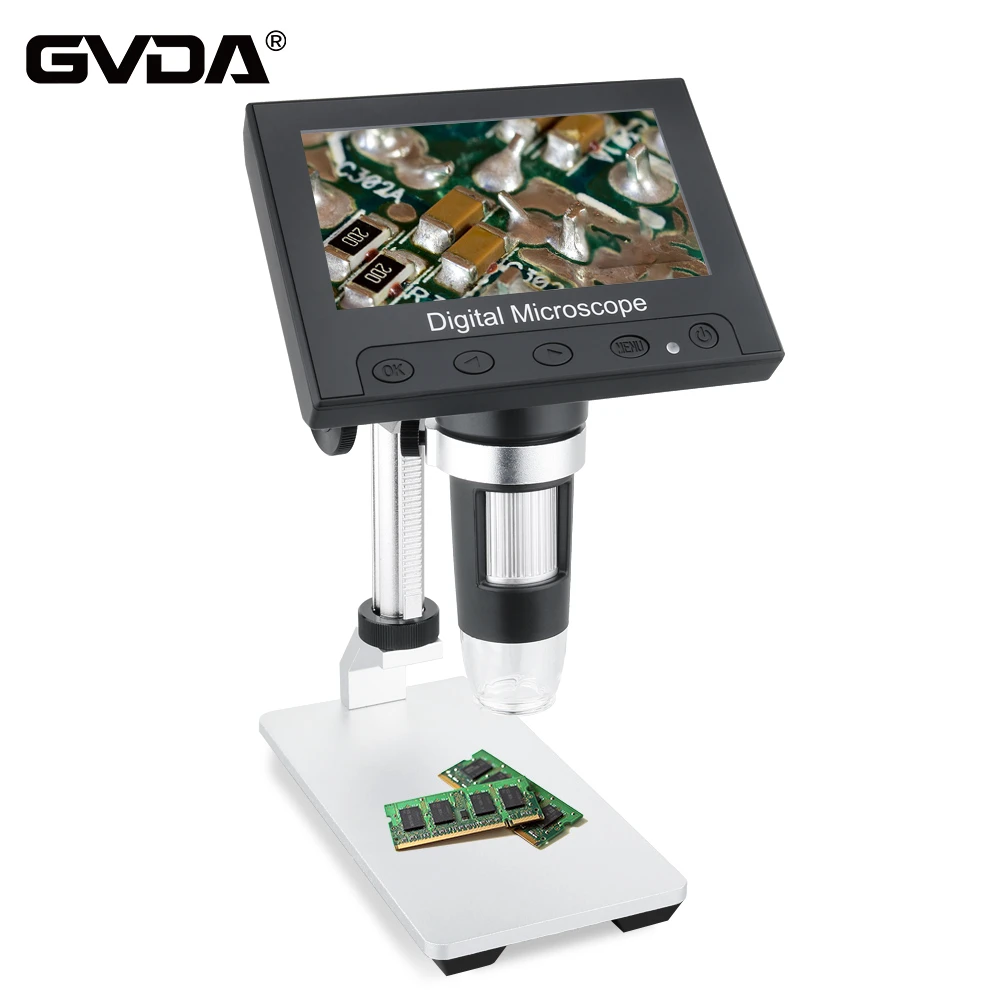
How to Distinguish the Quality of Microscope Digital Camera Adapters
A microscope digital camera adapter is an accessory used to connect a digital camera to a microscope for image capture. Its function is to transmit the image from the microscope eyepiece to the camera's imaging sensor through optical elements, convert the optical image into an electrical signal, and then perform image processing, measurement, and other computer-based analysis.
Microscope digital camera adapters can be divided into two main types according to their imaging principle and structure: one is the camera-integrated type, in which a digital camera is directly connected to the microscope; the other is the eyepiece-projection type, in which a camera is connected to the microscope eyepiece through an additional adapter. The former requires an external connection interface, a digital imaging head, or a video camera head, while the latter requires only a suitable connection between the camera and the eyepiece.
Using a digital camera for microscope imaging has become a very common method because it allows images to be saved, edited, printed, or used for image analysis.
At present, most digital cameras used for microscope imaging are general-purpose digital cameras, such as single-lens reflex cameras and some fixed-lens cameras. If the camera lens cannot be removed, it can only be connected to the eyepiece for imaging.
The quality of a microscope digital camera adapter can be evaluated from the following aspects:
1. Image Uniformity
A commonly accepted standard is that, after installing the adapter, the image on the camera's LCD screen should be full and clear, with no obvious vignetting or shadows. In other words, the entire field of view should be evenly illuminated.
2. Color Reproduction
The color fidelity of the captured image is also an important indicator of a good adapter. A high-quality adapter should produce images whose colors match the colors observed through the microscope eyepiece.
3. Image Sharpness
As most users know, a captured image should have a certain resolution (except for artistic effects). When observing a microscope image, there may be some color fringing. A good adapter should minimize this chromatic aberration and produce a clear image of the microscope field.