How to judge the quality of general capacitors using a digital multimeter
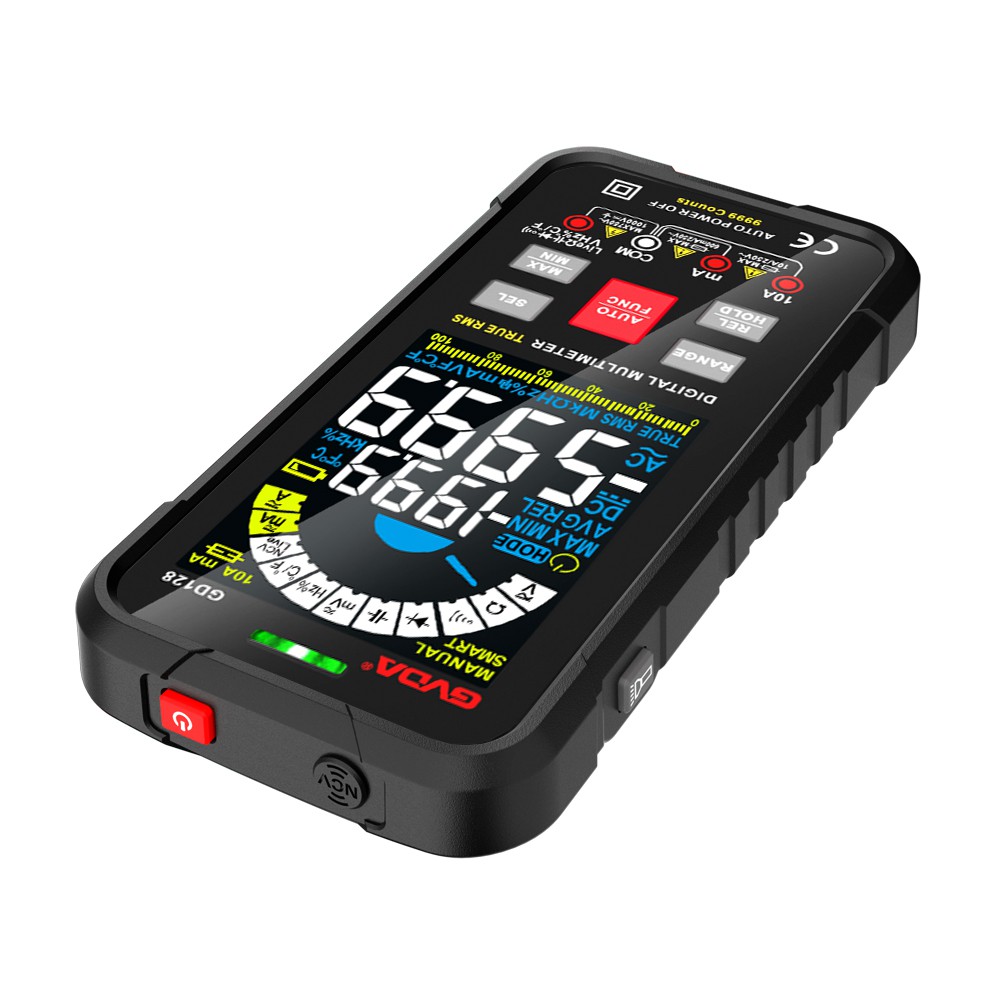
Fuse: Turn the multimeter to the diode setting (also called the buzzer setting). Connect the red pen and black pen to the two ends of the fuse. The conduction resistance is 0 ohms. There will be a buzzing sound, otherwise the fuse will burn out. ;
Capacitor: First use a red pen to short-circuit both ends of the capacitor, set the multimeter to the diode setting, and then use a red pen and a black pen to connect to each pin respectively. If the resistance value is displayed, it will continue to increase until it displays 1 (infinity). The capacitor is of good quality. If the resistance value displayed at the beginning is 0 or increases to a certain value and does not move, it means that the capacitor is internally open circuited or has a breakdown. If the resistance reaches infinity very quickly, it means that the capacitor has leaked;
Diode: According to the principle of forward conduction and direction cutoff of a diode, use red test leads and black test leads to measure its forward resistance and reverse resistance. If one set of data is measured to be infinite or the resistance is relatively large, and the resistance of the other set is small, It means the diode is normal.
Multimeter to test the quality of capacitor
Use the resistance ohm range of the digital multimeter and discharge the capacitor under test before measuring to prevent damage to the digital multimeter. The two levels of the capacitor are not connected, so it is best to connect them with appropriate resistors.
Measuring capacitance: Use the resistance range, select the appropriate range according to the capacitance, and note that the black test lead of the electrolytic capacitor must be connected to the positive electrode of the capacitor during measurement.
①. Estimating the capacity of microwave-grade capacitors: It can be determined based on experience or with reference to standard capacitors of the same capacity, and based on the maximum amplitude of the pointer swing. The reference capacitors do not have to have the same withstand voltage, as long as they have the same capacity. For example, when estimating a 100μF/250V capacitor, a 100μF/25V capacitor can be used as a reference. As long as the maximum amplitude of their pointer swings is the same, it can be concluded that the capacities are the same.
②. Estimating the picofarad capacitance size: Use the R×10kΩ scale, but you can only measure capacitances above 1000pF. For a capacitor of 1000pF or slightly larger, as long as the watch needle swings slightly, the capacity is considered to be sufficient.
③. Test whether the capacitor is leaking: For capacitors of more than 1,000 microfarads, you can first use the R×10Ω gear to quickly charge it, and initially estimate the capacitance capacity, and then change to the R×1kΩ gear to continue testing for a while. At this time, the pointer does not move. It should return and stop at or very close to ∞, otherwise there will be leakage. For some timing or oscillation capacitors below tens of microfarads (such as the oscillation capacitor of a color TV switching power supply), the requirements for their leakage characteristics are very high. As long as there is a slight leakage, they cannot be used. In this case, they can be charged in the R×1kΩ range. Then switch to the R×10kΩ range and continue measuring. Similarly, the needle should stop at ∞ and should not return.