How to judge whether the multimeter is normal?
Multimeters are divided into digital and analog. The following describes the methods to determine whether it is normal or not.
For an analog multimeter, you can hold it in your hand and shake it gently. If the pointer is unusually flexible, it can be judged that the meter is broken. Because the shunt resistance of the meter head can make the needle produce damping effect and stop quickly. Otherwise, the resistance is open circuit or the moving coil is disconnected.
For the DC voltage range, you can find a battery or DC power supply, and turn the meter to a slightly higher range (for example, use the 5V range to measure 1.5 or 3V batteries) to measure. For AC voltage, 250 or 500v can be used to measure 220Ⅴ mains directly.
The resistance file needs to be installed with a battery to measure. When the test leads are short-circuited, the pointer should swing full-scale, and then use the zero-adjusting potentiometer to adjust the pointer to the full-scale 0Ω position. A slight adjustment is required for each shift of 0 position. The 10K gear needs to be installed with 9Ⅴ or 15ⅴ high-voltage batteries to work. The Rx10K gear of most 9V multimeters uses two batteries of 9v and 1.5v in series, so two batteries are indispensable when using this gear. And 15v is generally high and low voltage separate power supply without affecting each other.
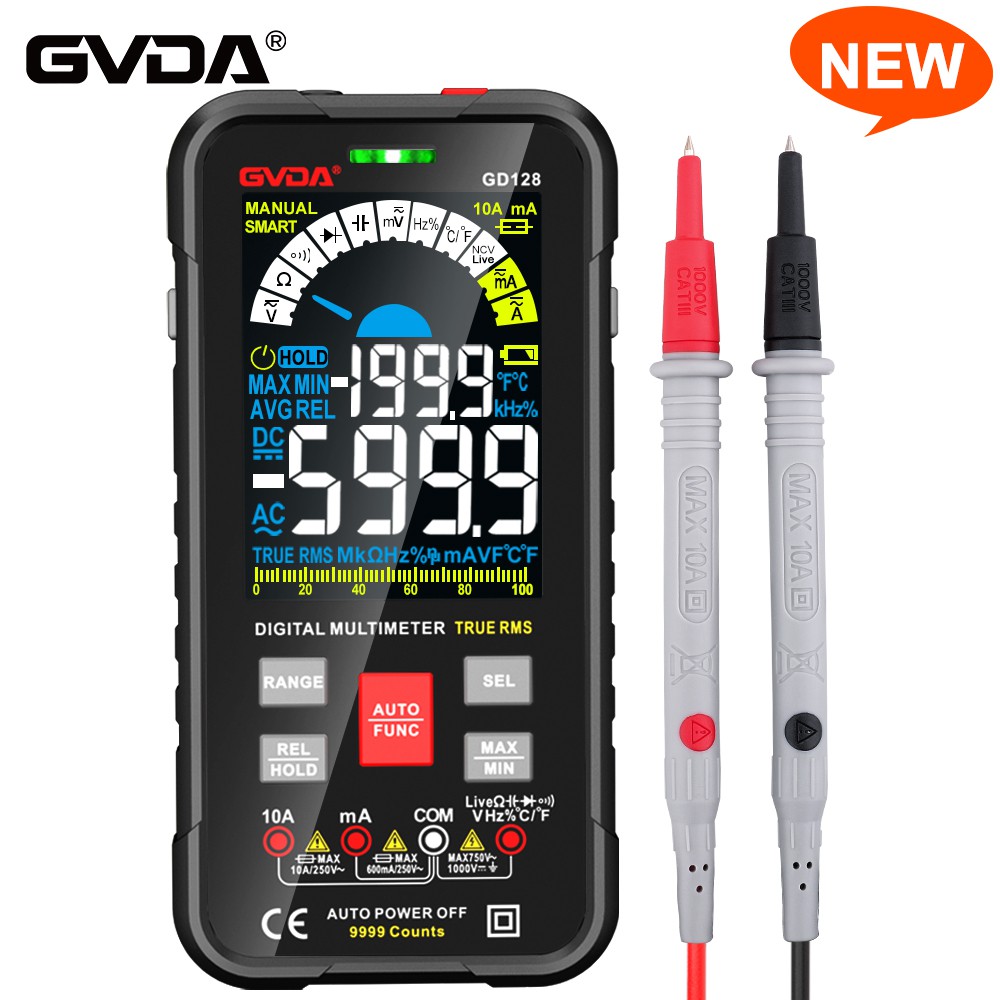
For a digital meter, the first thing to do is to install the battery and turn on the power switch. The screen should now appear. Turn the knob to the resistance gear and short-circuit the test leads. All resistance gears should display 0Ω. Only the 200Ω gear may have a test lead resistance of a few tenths of ohms, which is normal.