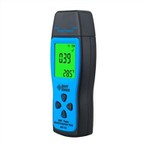
How to measure and diagnose CAN bus with multimeter
Detection prompt
Voltage detection (oscilloscope): The prerequisite for voltage detection is that the battery is connected and the ignition switch is turned on.
Resistance measurement: During resistance measurement, the tested component must be powered off before measurement. To do this, the wiring of the vehicle battery should be disconnected. Wait for about 3 minutes until all capacitors in the system are discharged.
CAN bus
The CAN (Controller Area Network) bus system is a linear bus system with the following characteristics:
Signal propagation in both directions.
All bus users receive the same message. Each bus user decides whether to utilize this information.
Additional bus users can be added through simple parallel connection.
This bus system constitutes a multi master control unit system. Each bus user can be a main control unit or a sub control unit, depending on whether it is connected as a transmitter or receiver.
The transmission medium is a two-wire connection. The names of the wires are CANLow and CANHigh
In principle, each bus user can communicate with all other total users through the bus. Control data exchange on the bus through intervention methods.
The main differences between data buses K-CAN (Vehicle CAN), PT-CAN (Transmission CAN), and F-CAN (Chassis CAN) are:
K-CAN: The data transmission rate is about 100kBit/s. Single line operation is possible.
PT-CAN: The data transmission rate is about 500kBit/s. Cannot operate on a single line.
F-CAN: The data transmission rate is approximately 500kBits/s. Cannot run on a single line
Main control unit
The main control unit is the active communication party, and the initiative of communication is issued by it. The main control unit controls the bus and controls communication. The main control unit can send information to passive bus users (sub control units) in the bus system and receive information according to the requirements of passive users.