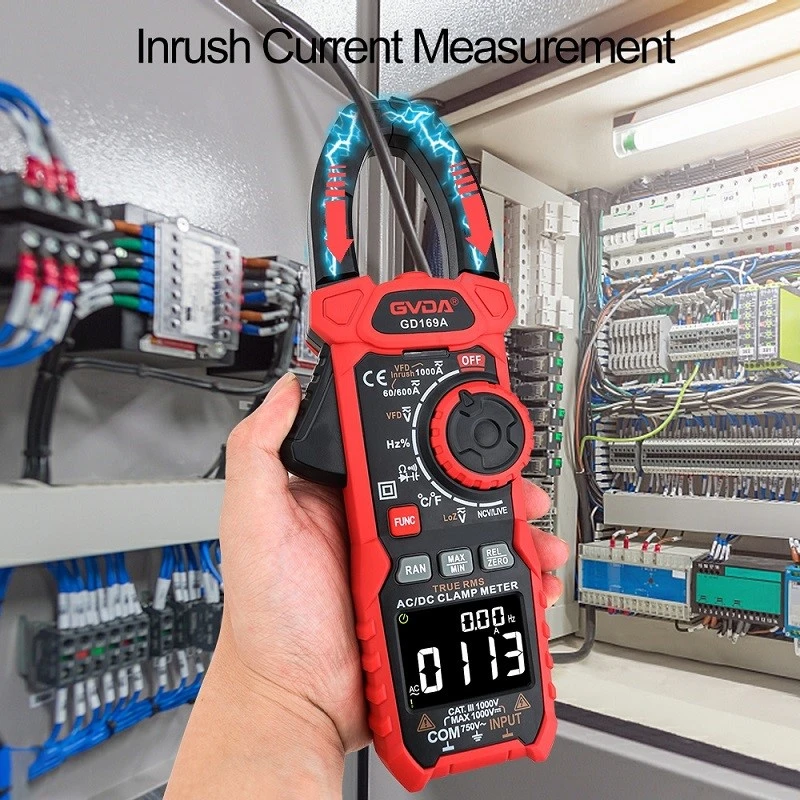
How to Measure Leakage Current and Short Circuit with a Clamp Meter
A clamp meter, generally referred to as a clamp ammeter, is mainly used for current measurement without direct contact with the circuit. Although clamp meters are not specially designed for measuring leakage current or short circuits, they can assist in detecting such circuit faults under certain conditions. This article introduces in detail how to use a clamp meter for auxiliary detection of leakage current and short circuits.
1. Basic Principle of Clamp Meters
A clamp meter measures the current in a conductor via a Hall‑effect sensor. When current passes through the closed jaws, the generated magnetic field is detected by the sensor and converted into a current reading.
2. Detecting Leakage Current with a Clamp Meter
Leakage current means current flows along an unintended path, for example, flowing to the ground through wires with damaged insulation. A clamp meter can help detect leakage current, especially when dedicated leakage test instruments are unavailable:
① Measure the baseline current: First, switch off all loads (electrical equipment). Use the clamp meter to measure the current of the main power circuit and record the value as I1.
② Switch on the loads: Then turn on the loads one by one and observe whether the reading of the clamp meter rises. If the current reading increases abnormally after a certain load is switched on, this load may have leakage.
③ Compare current variations: Normally, the current rises when a load is energized. If the increment is far greater than the rated current of the load, leakage may exist.
④ Test the neutral conductor: If possible, measure the current on the neutral line (N line). Ideally, the current in the live conductor and the neutral conductor should be equal. A mismatch between the two readings indicates possible system leakage.