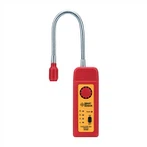
Using a multimeter, how to measure leakage
Use the on-off gear of the multimeter to measure the ground and the measured circuit part. If the meter shows resistance, it is judged that it is not insulated.
But in fact, if you measure the leakage, you should use a megohmmeter, that is, shake the meter. Because the voltage at both ends of the test pen is very low when the multimeter is measuring, generally not exceeding 9v, and the gap leakage cannot be broken down. The megohmmeter can reach more than 1000v. Insert the multimeter connector into the terminal corresponding to the measurement of AC power, then use one pen to measure the zero line or ground wire, and the other pen to test the place where you suspect leakage, and see the multimeter number. If it is 0, then there is no leakage here. No voltage! If it is 220 or other voltage readings exceeding 36V, it is a leakage, indicating that it is not safe here!
Measure the insulation resistance with the 200M resistance range of the multimeter, first determine which wire is leaking, or which two wires are short-circuited.
Methods as below:
Measure the insulation resistance of the live wire and the neutral wire, measure the insulation resistance of the live wire to the ground wire, and measure the insulation resistance of the neutral wire to the ground wire. If the short circuit insulation resistance is basically zero.
Know which line is leaking, and use the segmented search method to gradually narrow down the scope of the fault.
Or use the elimination method to separate the lines and conduct power-on tests one by one.