How to measure the leakage of 220v line with multimeter
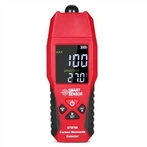
The problem of measuring 220V leakage with multimeter is not suitable, because what you want to measure is leakage current. Measuring weak AC current with multimeter is a weakness, and it is also troublesome to measure it inaccurately. If you have to measure it, you might as well use a clamp meter, but you should choose a clamp meter with appropriate range and better sensitivity.
If it is suspected that the circuit is leaking, it can be judged by the gap with leakage protection, and the range of leakage can be judged step by step to eliminate the fault.
I don't think it's appropriate to measure the line leakage with electric blocking. Because since it is leakage, that is, the resistance between the live wire and the protective ground is not infinite, but the voltage of the multimeter is not enough to explain the insulation between them, that is to say, the insulation resistance at 9V is completely different from that at 220V V. Therefore, the measurement of insulation resistance is always higher than the power consumption voltage to obtain reliable data. So you must use a shaking table.
Of course, if you just test whether there is a short circuit or a path between the live wire and the protective ground, it is also possible to block it with a multimeter. Just can't measure the insulation data between them.
Strictly speaking, a shaking table should be used to measure whether the circuit of line insulation resistance is leaking. The shaking table is equivalent to a 1000v or 500v generator. The leakage current passes through the sampling resistor inside the shaking table, and the sampling voltage indicator is generated on the resistor. Under normal circumstances, the stability of more than 0.5 megaohms is qualified. The battery inside the multimeter is 9v to 15v, and the resistance range and voltage range can only determine the short circuit and roughly judge whether there is leakage.
1. Power-off measurement: Turn off and disconnect all electrical appliances, use multimeter RX10K, one probe receives the measuring wire, and the other probe is grounded (or faucet), which should show infinite resistance, otherwise it will leak.
2. Live measurement: use a multimeter to press the 250-volt alternating current to measure the metal shell of the electrical appliance suspected of leakage. One probe is connected to the shell, and the other probe is grounded (or faucet). When the pointer shows that the voltage is higher than 30-50 volts, switch to the 50-volt alternating current gear. If the power supply is confirmed to be leakage above 30 volts, it is normal if it is lower than 30 volts. Then switch the zero and fire power supply plug wire and measure it again.
3. Leakage measurement between live wire and neutral wire (or live wire and live wire): Turn off and disconnect all electrical appliances, and measure the resistance between live wire and neutral wire, which should be infinite, otherwise it is leakage.
The accuracy of troubleshooting with the above method is 99.9%, which is convenient, rapid and practical. However, the megohm special shaking table is only used in engineering, which is inefficient in maintenance. Only when the multimeter is measured and confirmed to be good, but the line does leak electricity, can the shaking table be used, but the leakage electricity cannot be measured by the multimeter.