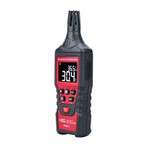
How to Select a Suitable Toxic and Hazardous Gas Detector
At present, with the development of manufacturing technology, portable multi gas (composite) detectors are also a new choice for us. Due to the fact that this detector can be equipped with multiple gas (inorganic/organic) detection sensors on a single host, it has the characteristics of small size, light weight, fast response, and simultaneous display of multiple gas concentrations. More importantly, the pump suction composite gas detector is cheaper and more convenient to use than multiple single diffusion gas detectors. It should be noted that when choosing such detectors, it is best to choose instruments with separate switch functions for each sensor to prevent damage to one sensor from affecting the use of other sensors. At the same time, in order to avoid the occurrence of blockage of the suction pump due to water ingress, instruments designed with intelligent pump stop alarms should also be selected.
Precautions when using a gas detector:
1) Pay attention to regular calibration and testing.
Toxic and harmful gas detectors, like other analytical and detection instruments, use a relative comparison method for measurement: first, calibrate the instrument with a zero gas and a standard concentration gas, obtain a standard curve, and store it in the instrument. During measurement, the instrument compares the electrical signal generated by the concentration of the gas to be measured with the electrical signal of the standard concentration to calculate the accurate gas concentration value. Therefore, zeroing the instrument at any time and regularly calibrating the instrument are essential tasks to ensure accurate measurement. It should be noted that many gas detectors currently have replaceable detection sensors, but this does not mean that a detector can be equipped with different detector probes at any time. Whenever replacing the probe, in addition to requiring a certain sensor activation time, the instrument must also be recalibrated. In addition, it is recommended to perform response testing on the standard gas used in various instruments before use to ensure that the instruments truly provide protection.
2) Pay attention to the detection interference between different sensors.
Generally speaking, each sensor corresponds to a specific gas being detected, but no gas detector can be highly effective. Therefore, when choosing a gas sensor, it is important to understand as much as possible the detection interference of other gases on the sensor to ensure accurate detection of specific gases.