How to test air volume and wind speed in clean rooms
How to detect air volume and wind speed in a clean room? 1. Air volume and wind speed detection must be carried out first, and the various effects of purifying air conditioning must be obtained under the designed air volume and wind speed conditions.
2. Before conducting air volume testing, it is necessary to check whether the fan is running normally, whether the components in the system are installed correctly, and whether there are any obstacles (such as whether the filter is blocked or blocked). All valves should be fixed in a certain open position, and the size of the tested air outlet and duct must be actually measured.
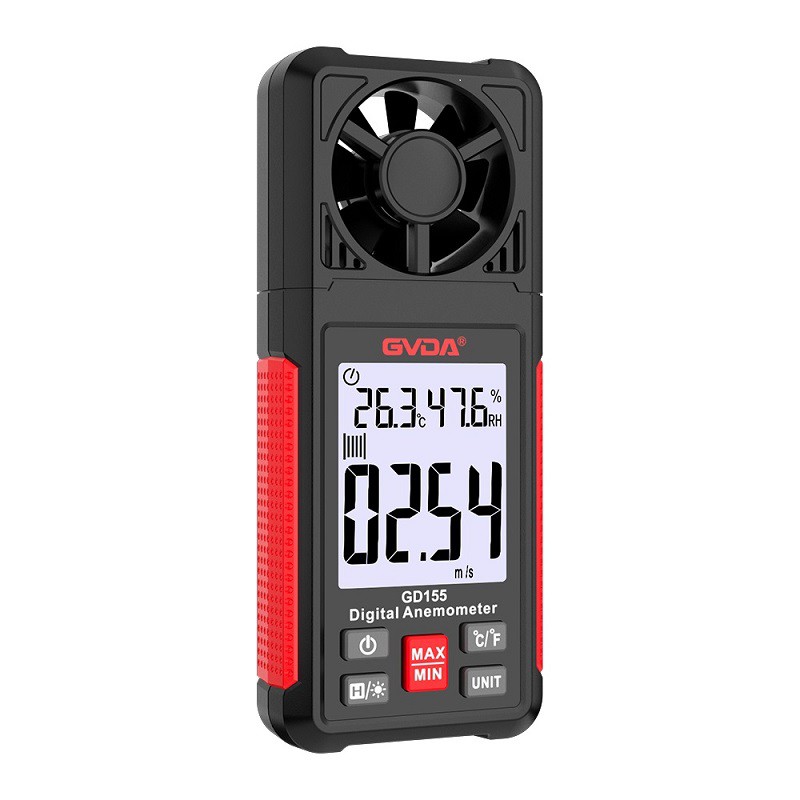
3. For a unidirectional flow (laminar flow) clean room, the air supply volume is determined by multiplying the average air velocity and cross-sectional area of the room section. The measured cross-sectional area of a vertical unidirectional flow (laminar flow) clean room is taken from a horizontal section 0.8 m above the ground, and a horizontal unidirectional flow (laminar flow) clean room is taken from a vertical section 0.5 m above the air supply surface. The spacing between measuring points on the cross-section should not exceed 2m, and the number of measuring points should be no less than 10, evenly arranged. Instrument uses a hot bulb anemometer.
4. For turbulent flow cleanrooms, the air supply volume can be determined using either the vent method or the duct method, as described in items 6, 7, and 8, respectively.
5. For air vents without filters installed, the method in Appendix 1 of the current national standard "Code for Construction and Acceptance of Ventilation and Air Conditioning Engineering" GBJ243 can be followed.
6. For air vents with filters installed in clean rooms, auxiliary air ducts can be selected according to the form of the vent, which are made of hard boards and have a straight pipe section that meets the inside of the vent and has a length equal to twice the side length of the vent. It is connected to the outside of the filter vent and evenly arranged with at least 6 measuring points on the outlet plane of the auxiliary air duct. The wind speed at each point is measured using a hot bulb anemometer. Determine the air volume based on the average wind speed and net cross-sectional area of the air outlet section.