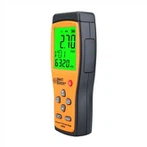
How to Test for Short Circuits and Open Circuits with a Multimeter
A multimeter is an essential "hardcore" tool for friends engaged in electronics, electrical engineering, and maintenance related fields. It has very powerful functions and can be used to measure AC voltage, DC voltage, AC current, DC current, resistance, capacitance, diode, transistor, temperature, etc. For example, when testing and debugging products, we need to use a multimeter to assist in finding problems.
When a product malfunctions, I usually measure the input and output voltages using the voltage range to determine if the power supply circuit is functioning properly. Abnormal voltage often indicates a short circuit or open circuit.
Buzzer gear test for short circuit and open circuit
A digital multimeter usually has a buzzer mode, which will sound "BI" when connected, which is very intuitive and does not require staring at the multimeter.
When measuring two positions that should not be connected, if a "BI" sound is emitted, it indicates a short circuit; When measuring two positions that should be connected, but there is no "BI" sound, it indicates that there is a circuit breaker;
If your multimeter does not have a buzzer mode, you can also use a resistance mode to determine if there is a short circuit or open circuit according to the method of measuring resistance. If the resistance becomes very small, only a few ohms, or even a few tenths of an ohm, it indicates a short circuit; If the resistance value cannot be measured or is significantly high, it indicates that there is an open circuit.
Leakage measurement
Leakage is divided into strong current leakage and weak current leakage. Strong electric leakage refers to the leakage of AC high voltage, which can cause electricity to people or cause the leakage switch to trip. You can set the multimeter to AC mode to measure whether there is a certain AC voltage. Another method is to disconnect the power supply and measure the resistance between the leakage point and the live wire (L) or neutral wire (N) using the maximum range of resistance. If there is no leakage, the resistance value is extremely high, equivalent to insulation. If the resistance to ground is not large enough and a resistance value of several hundred K is measured, then there may be leakage.
If you want to measure the weak leakage of a weak current circuit, you can use the current range of a multimeter, connect the multimeter in series to the circuit, and measure whether the working current has increased. For example, when the product is in normal standby mode, the current is several tens of microamperes, but when it is measured to be several hundred microamperes or even several milliamps, it indicates that there are components with leakage in the circuit. If you are not sure about the magnitude of the working current when measuring current, you can start with the gear with a larger range and gradually reduce the range to test. Exceeding the range can easily burn out the fuse of the multimeter.