How to test the quality of rectifier diodes with an analog multimeter
How to test the quality of rectifier diodes with an analog multimeter
Rectifier diodes are mainly used in rectifier circuits to convert alternating current into direct current by using the unidirectional nature of the diode. The rectification forms include half-wave rectification and full-wave rectification.
Rectifier diodes can also fail, which can manifest as diode short circuit, open circuit, etc.
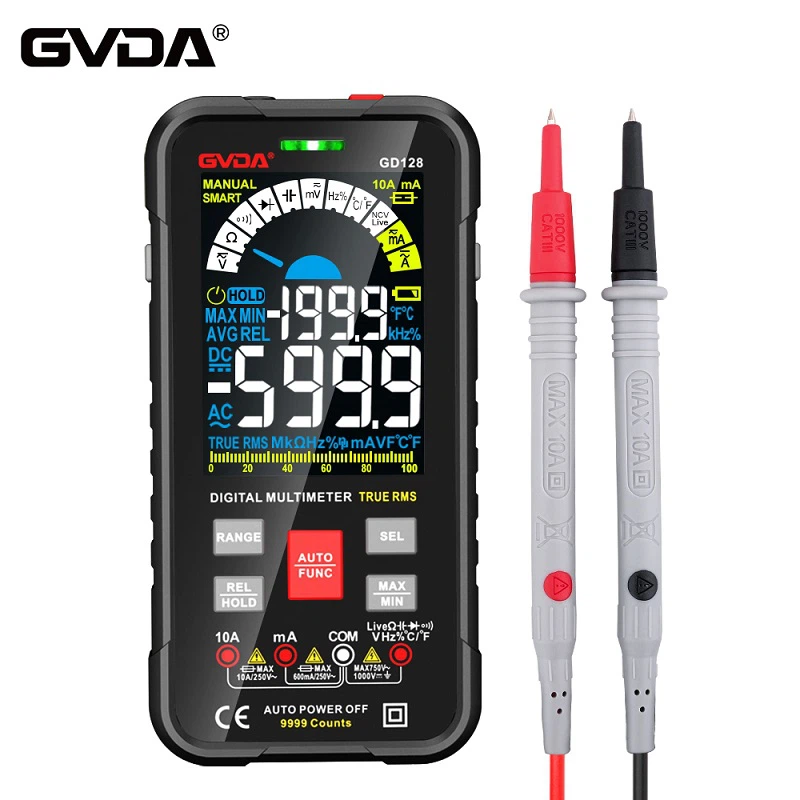
You can use a pointer multimeter or a digital multimeter to detect the quality of the diode. Let's talk about using a pointer meter to detect and judge the quality of rectifier diodes.
Pointer multimeter detects the quality of rectifier diodes
Diodes conduct electricity in one direction. That is, applying forward voltage turns it on and applying reverse voltage turns it off. Its forward resistance is small and its reverse resistance is large, which is the basis for detection.
Normally, for a single rectifier diode, first set the multimeter to the Rx100 or Rx1K ohm range when testing. Connect the two test leads to the two leads of the diode and measure the resistance value. Then exchange the two test leads and measure the resistance value again. Finally, compare the results of the two measurements.
If the primary resistance is large and the primary resistance is small, it means that the rectifier diode is normal. When the resistance is small, the black test lead is connected to the anode of the diode, and the red test lead is connected to the cathode of the diode.
If the resistance is very high both times, it means that the diode is open.
If the resistance is very small both times, it means the diode is short-circuited.
It should be noted that the measured resistance value will be different if different gears are selected.
During actual maintenance, the diode often has to be soldered out of the circuit, which is troublesome. In fact, you can directly detect it online without soldering the rectifier diode. The method is simple and the effect is good. Now I share it for reference.
Power on the electrical equipment normally (AC), set the multimeter to the AC voltage range, select a specific range according to the rectifier voltage range, connect the red test lead to the positive pole of the rectifier diode, and the black test lead to the negative pole, and measure an AC voltage value. Then reverse the test leads and measure another voltage value. Using the same method, set the multimeter's range to the DC voltage range and measure a DC voltage value. Then compare the results.
If the AC voltage value measured for the first time is about twice the DC voltage value, and the AC voltage measured for the second time is zero, it means that the rectifier diode is normal.
If the AC voltage values measured twice are not much different, it means that the diode has broken down.
If the voltage value measured twice is zero, it means that the diode is short-circuited.
If the value measured for the second time is neither zero nor equal to the value of the first time, it means that the diode performance has deteriorated.