How to use a clamp ammeter to check leakage and electricity theft problems in low-voltage lines?
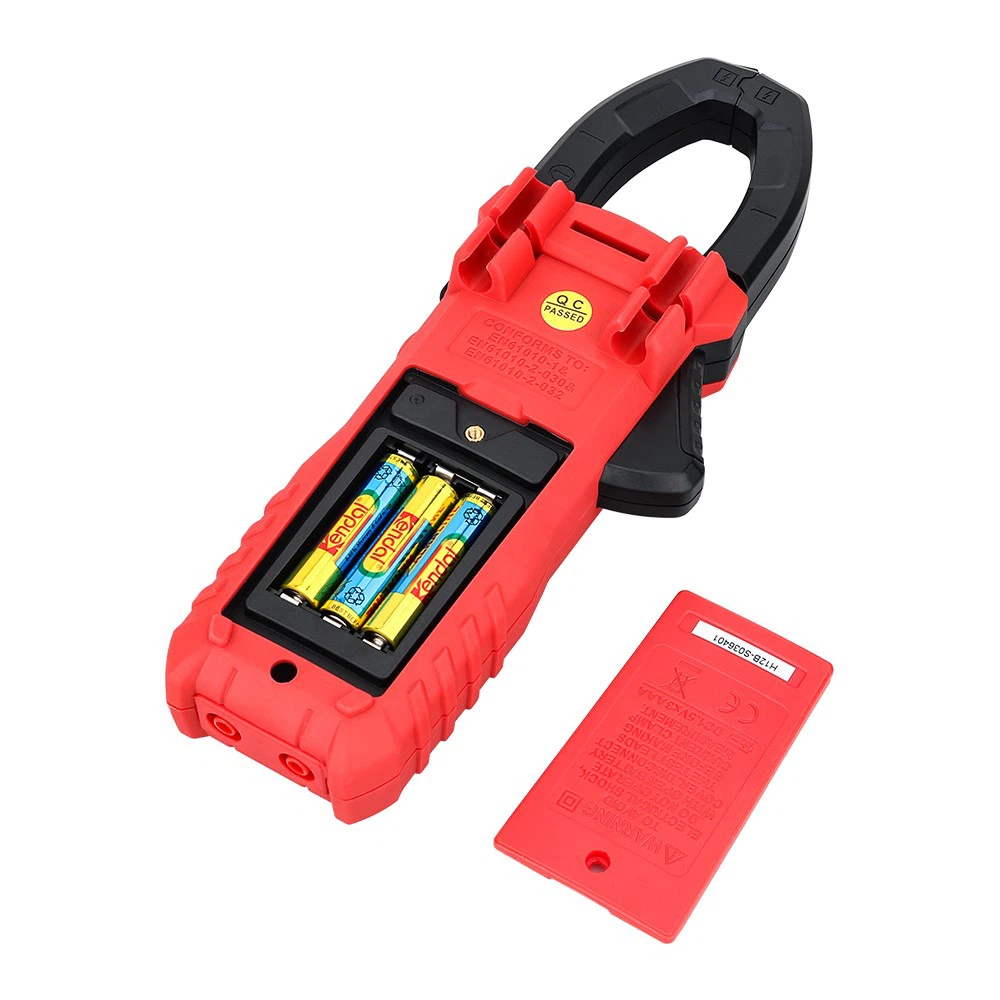
The clamp ammeter is composed of a current transformer and an ammeter. The iron core of the current transformer can be opened when the wrench is tightened; the wire through which the current is measured can pass through the open gap of the iron core without cutting it, and the iron core is closed when the wrench is spread out.
The wire of the circuit under test passing through the iron core becomes the primary coil of the current transformer, in which a current is induced in the secondary coil through the current. Then the ammeter connecting the secondary coils will have an indication - measure the current of the circuit under test.
The clamp ammeter can be changed to different ranges through the shift switch. However, it is not allowed to operate with power on when shifting gears. The accuracy of clamp meters is generally not high, usually 2.5 to 5 levels.
For convenience of use, there are switches in different ranges in the meter to provide different levels of current and voltage measurement functions.
When an ordinary ammeter is used to measure current, the circuit needs to be cut off and shut down before the ammeter can be connected for measurement. This is very troublesome, and sometimes a normally operating motor does not allow this.
At this time, it is much more convenient to use a clamp ammeter, which can measure the current without cutting off the circuit. The clamp ammeter is the best tool for checking leakage or electricity theft on low-voltage lines.
1. Determine whether there is a problem with the residual current-operated protector itself.
Method: At the distribution transformer, disconnect the fuse on the phase line on the outlet side of the AC contactor that controls the low-voltage line. If the residual current action protector can operate normally at this time, it is confirmed that the residual current action protection The machine is good. Otherwise, the remaining electrical action protector should be inspected and replaced.
2. Check and determine which phase line is leaking
Method: At the distribution transformer, disconnect the neutral wire on the outlet side of the AC contactor that controls the low-voltage line, then install the removed fuse core on one of the phases, and use a clamp ammeter to measure the phase, the measured current is the leakage current of that phase. Measure the leakage current of other leakage phases in sequence in the same way.
In order to avoid phase line grounding on the line (if there is no partial discharge, power frequency test transformer, fully automatic transformation ratio tester, ground conduction resistance tester, frequency conversion series resonance test device, wireless high-voltage nuclear phase device adopt the one-line-one-ground method. (Electricity, etc.) A large current will damage the instrument. When testing, first set the clamp ammeter to the high current gear; if the detected value is very small, then switch the clamp ammeter to the milliampere gear for detection. From: Home of Electrical Technology
3. After determining the phase line with leakage, determine the location of the leakage
Method: At the distribution transformer, insert the fuse core into the phase line to be checked, disconnect the fuses of the neutral line and the other two phases, and use a clamp ammeter on the pole to detect the live phase line to determine the location of the leakage. In order to improve efficiency, the climbing pole position can be selected in the middle of the line. Through inspection, it can be determined whether the leakage location is in the first half or the second half of the line, and then the line section where the leakage is suspected is detected. By analogy, the detection limitations are reduced.
Finally, test the phase line pillar insulators within the determined smaller range, and test the subscriber line phase lines connected to the phase line within the range (can be done on the ground, or when testing insulators Also carried out) to determine the detailed location of the leakage.