How to use a multimeter to detect the inverter power module
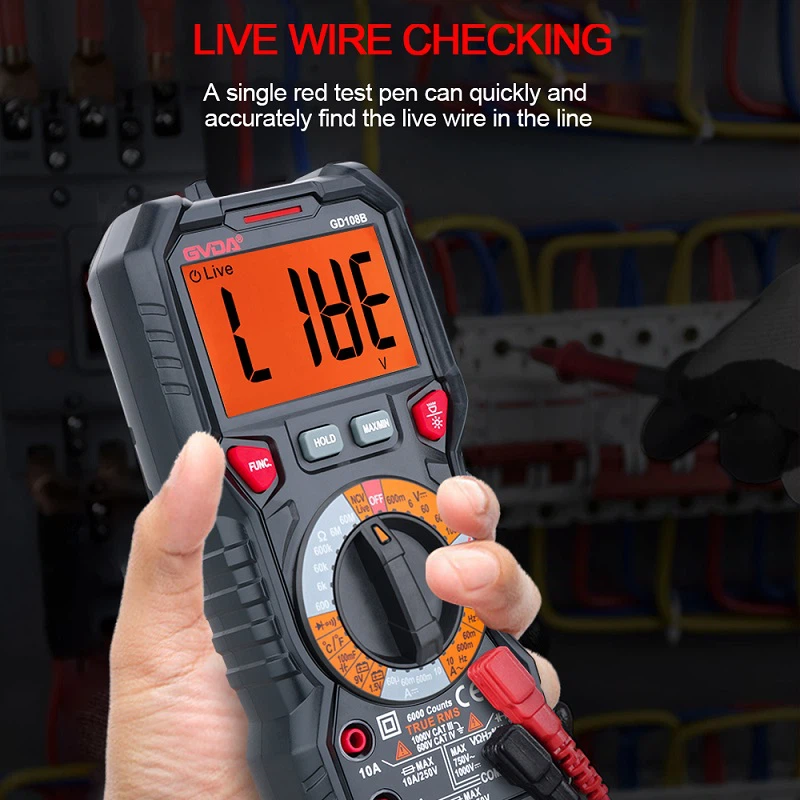
When the power module is tested (disconnected from the power grid), the collector and emitter of the six diodes of the rectifier bridge and the six IGBT tubes of the output bridge can be measured forward and backward using a pointer multimeter R × l to determine whether they have broken down. Table 1 and Table 2 are normal measurement results, otherwise there are internal breakdown components. Measure the resistance (drive signal input terminal) between the gate and emitter of six IGBT transistors using a pointer multimeter Bx1k. If there is a difference, it indicates damage to the drive circuit or IGBT transistor. The above measurements can only measure the breakdown damage of IGBT tubes. No open circuit damage can be detected. After removing the power module from the circuit board, each IGBT tube can be further measured using the method shown in Figure 1, where the needle on the left indicates non conductivity. The needle on the right indicates conductivity. If it cannot be turned on and off, the tube is damaged.
Structure of frequency converter power module:
The internal packaging of the frequency converter power module consists of a single-phase or three-phase bridge rectifier circuit composed of diodes, and another three-phase bridge output circuit composed of six IGBT transistors (insulated gate bipolar transistors) and six damping diodes used in conjunction.
P1 is the positive terminal of the+300V rectifier output, and N1 is the negative terminal of the rectifier output. These two pins are externally connected to a filtering electrolytic capacitor, and are connected to P2 and N2 through mutual inductance coils P1 and N1, respectively, to supply power to the output bridge composed of six IGBT tubes.
The collectors of the three IGBT transistors in the upper half bridge of the three-phase output bridge are connected to the positive terminal of the power supply, and the emitters are the U, V, and W three-phase output terminals. The emitters and gates of the three transistors form the input terminals GU-U, GV-V, and GW-W for the driving signal of the upper half bridge of the three-phase. The collectors of the three IGBT transistors in the lower half bridge of the three-phase output bridge are connected to U, V, and W respectively, and the emitters are connected to the negative terminal of the power supply. The gates of the three transistors and the negative terminal of the power supply form the input terminals GX, GY, and GZ of the three-phase lower half bridge driving signal, and B is the braking control terminal.
There is no braking circuit inside this module. TH is the output terminal protected by an internal thermistor. Although the pins and markings on the circuit board of other models of universal frequency converter power modules are different, it is not difficult to identify the main functional pin positions. High end products adopt intelligent power modules, which include driving circuits and braking circuits internally, with correspondingly more pins.
The power module of a frequency converter, as the name suggests, refers to the combination of power electronic and electrical components in the frequency converter according to certain functions and then encapsulated into a module. The frequency converter itself is composed of a control unit and a power module. In general, the power module of a frequency converter is constructed by integrating the outer shell and external electrode terminals to reduce the number of components and internal wiring inductance.