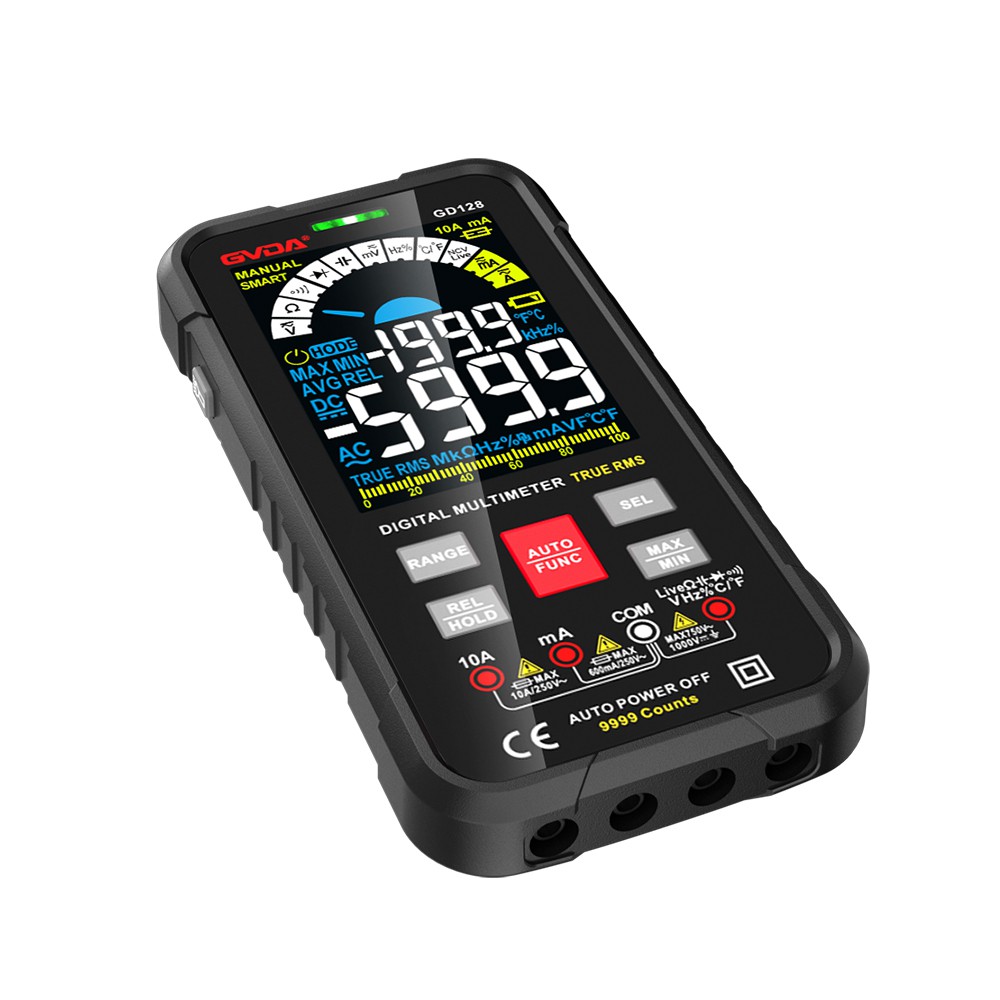
How to use a multimeter to determine whether a circuit is shorted, open, or leaky
The method of judging short circuit, open circuit and leakage by multimeter is:
Short circuit: Disconnect the power supply and measure the resistance. When the resistance is very small or even 0, it is a short circuit (metal short circuit);
Open circuit: Disconnect the power supply and measure the resistance. When the resistance is infinite, it is open circuit (open circuit)
Leakage: Turn on the power supply and measure the voltage of the shell to the ground. When the voltage is large, it is a leakage; measure the difference between the current flowing through the live wire and the neutral wire, if it is not 0, it is a leakage.
The above is the principle of the multimeter to judge the circuit fault, but there are some differences in the actual circuit fault judgment.
Next, let's take a look at how to use a multimeter to judge short circuit, open circuit and leakage in the actual circuit.
1: Summary
The picture below is my summary of the method of checking short circuit, open circuit and leakage with multimeter, which can be saved for future use.
2: The multimeter judges the short circuit (220V circuit as an example)
(1): Disconnect the circuit power supply.
(2): Cut off the circuit breaker of each branch of the circuit
Purpose: To eliminate the influence of branch roads on trunk roads.
(3): Measure the resistance between the live line and the zero line of the main road. If the resistance is 0, there is a short circuit (metal short circuit) in the main road.
Note: After confirming that there is a short circuit in the main circuit, continue to measure the resistance between the terminals of other equipment on the main circuit. Determine the short-circuit point in turn.
(4): According to the same method as the trunk road, find out whether there are short-circuit points in each branch road.
Note: It is difficult to determine the short-circuit fault point of the circuit, but as long as we follow the circuit drawing,
Divide the circuit into small pieces according to the main branch, and patiently measure the resistance value, everything can be easily solved.
3: The multimeter judges the open circuit (220V circuit as an example)
The open circuit judgment can be judged according to the infinite resistance when the circuit is open.
But when the circuit is more complicated, we can turn on the power,
Then determine the abnormal point (for example, the indicator light is not on, or other equipment is working abnormally),
According to the circuit diagram, measure the voltage to ground step by step.
When the voltage of a component to ground is 0, it means that there is an open circuit before it, and continue to search upwards.
until the breaking point is determined.
4: Multimeter to judge leakage (220V circuit as an example)
How to judge when the shell is charged:
Turn on the power supply of the device, switch the multimeter to the AC voltage measurement position, connect one end of the two test leads to the device shell, and the other end to ground, and measure the voltage of the shell to the ground. If voltage is present, the enclosure is leaking.
How to judge the line leakage:
Since the multimeter needs to connect the test leads to the circuit in series when measuring the current, it is cumbersome, so we can use the clamp ammeter to measure the circuit current when conditions permit.
Turn on the power supply of the circuit, pass the neutral and live wires of the main circuit side by side through the clamp ammeter, if there is no leakage, the current is zero. If there is leakage, the current is not 0.
Divide the circuit into segments and measure each segment. Until the leakage point is determined.