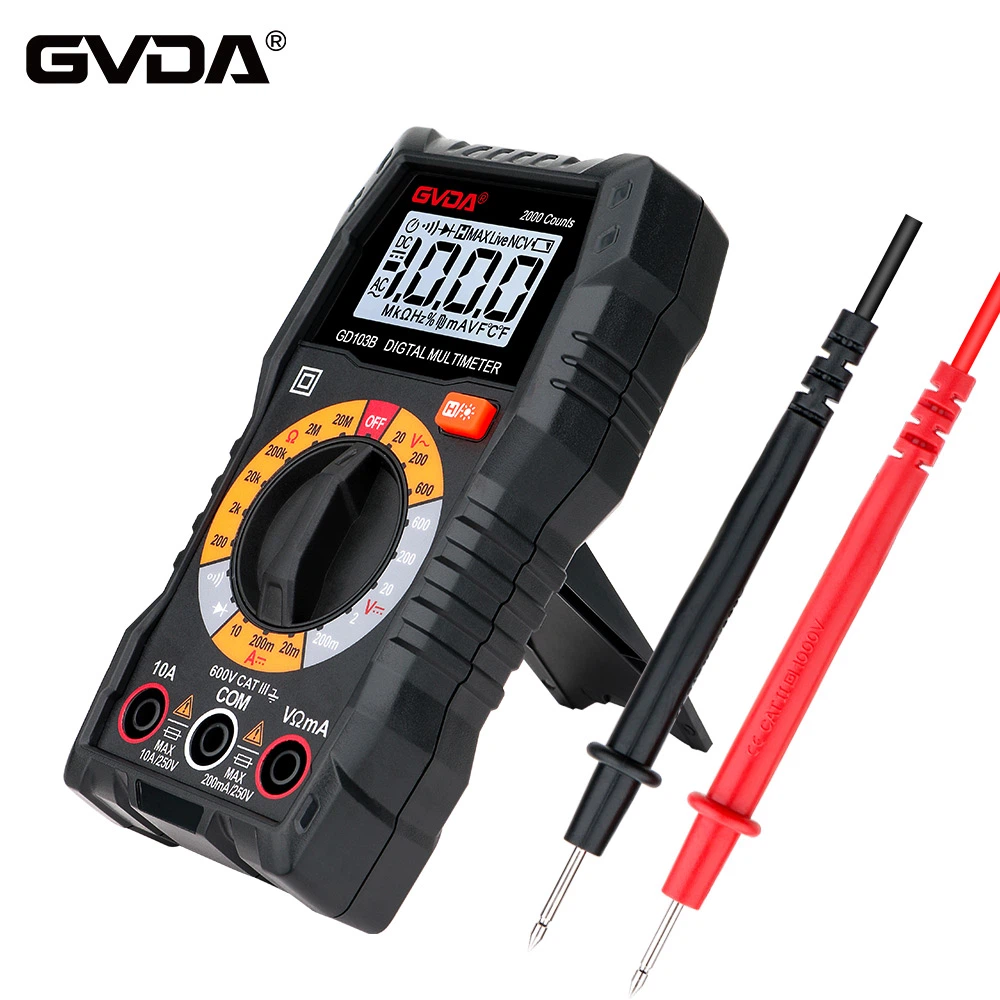
How to use a multimeter to measure voltage
1. Measure the voltage:
When measuring voltage (or current), a good range should be selected. If a small range is used to measure a large voltage, there will be a danger of burning the meter; if a large range is used to measure a small voltage, the pointer deflection is too small to be read.
The selection of the range should try to make the pointer deflect to about 2/3 of the full scale. In the actual measurement, when the approximate value of the measured voltage cannot be determined, the switch can be turned to the maximum range first, and then the range can be reduced to the appropriate position. Generally, when measuring voltage, the meter pen should be connected to the circuit under test in parallel.
a. Measurement of AC voltage: Put one switch of the multimeter on the AC and DC voltage range, and the other switch on the appropriate range of AC voltage. The two test leads of the multimeter are connected in parallel with the circuit or load under test.
b. Measurement of DC voltage: put one switch of the multimeter on the AC and DC voltage gears, and the other switch on the appropriate range of DC voltage, and the "+" test lead (red test lead) is connected to the high potential, " The -" test lead (black test lead) is connected to the low potential, that is, the current flows in from the "+" test lead and flows out from the "-" test lead. If the test leads are reversed, the pointer of the meter head will be deflected in the opposite direction, and it is easy to bend the pointer.