How to Use a Multimeter to Quickly and Accurately Locate DC Power Supply Faults
In today's era highly dependent on electronic devices, stable and reliable power supply is essential for industrial production, commercial operations, and daily life. As the heart of many electronic devices, the stable operation of DC power supply is directly related to the efficiency and safety of the entire system. However, like all mechanical equipment, DC power supplies are inevitably prone to various malfunctions during long-term use. Facing these faults, how to quickly and accurately locate the problem has become a skill that every technician must master. At this point, the Fluke multimeter became a powerful tool in our hands, especially when diagnosing and troubleshooting DC power supply faults, its performance was particularly outstanding.
As a leader in the field of electronic testing and measurement, Fluke's multimeter products have won widespread praise from users worldwide for their excellent performance, stable quality, and user-friendly design. The Fluke multimeter not only has basic voltage, current, and resistance measurement functions, but also integrates multiple measurement modes to meet testing needs in different scenarios. In the diagnosis of DC power supply faults, the Fluke multimeter has become the preferred tool for technicians due to its high accuracy, fast response speed, and easy operation.
There are various manifestations of DC power supply faults, such as unstable output voltage, no output, overload protection, etc. Faced with these complex and ever-changing fault phenomena, the Fluke multimeter can help us quickly locate the problem through its precise measurement capability.
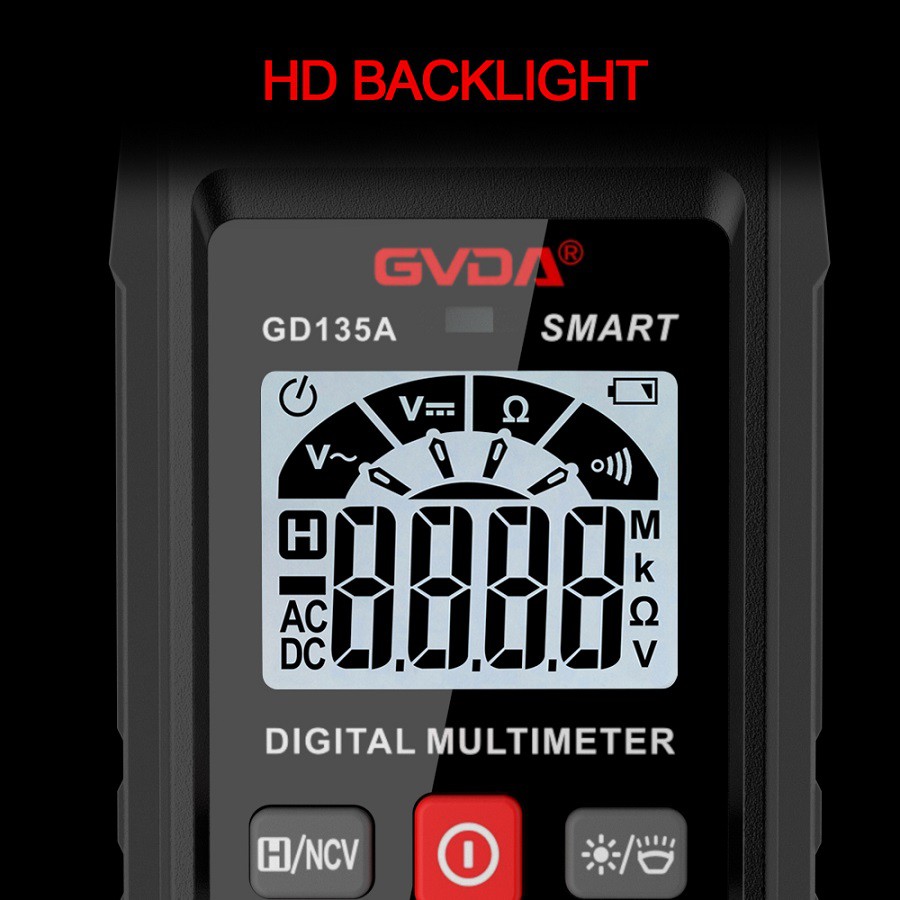
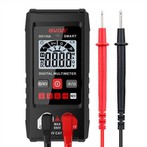
The operation of a DC power supply begins with the input of AC power. Therefore, when a DC power supply fails, the first thing to check is whether the AC input voltage is normal. Using a Fluke multimeter, we can easily switch the measurement mode to AC voltage mode, and quickly read the input voltage value by contacting the "L" (live wire) and "N" (neutral wire) terminals of the power supply with the black and red probes, respectively. If the measured value does not match the nominal value of the power supply, or there is a significant fluctuation, then the problem is likely to lie in the input power supply or power line.
After confirming that the AC input voltage is normal, the next step is to detect the DC output voltage. The Fluke multimeter also supports measuring DC voltage. We only need to switch the measurement mode to DC voltage mode, and touch the probe to the output terminal of the power supply according to the positive and negative polarity to read the DC output voltage value. If the output voltage does not match the voltage value specified by the manufacturer, or there are obvious fluctuations or instability phenomena, it can be preliminarily judged that there are problems inside the DC power supply, such as filter capacitor failure, voltage regulator circuit failure, etc.
When the Fluke multimeter detects abnormal DC output voltage but cannot further determine the specific fault point, we need to use more advanced tools such as oscilloscopes for in-depth investigation. Oscilloscopes can display real-time changes in voltage over time, helping us capture transient phenomena and waveform anomalies that cannot be detected by multimeters. By observing the waveform on the oscilloscope, we can have a more intuitive understanding of the working status of the power supply, thereby accurately locating the fault point.