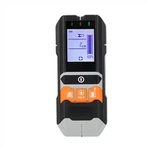
How to use coating thickness gauge correctly
Why are there significant differences in the data measured by coating thickness gauges calibrated by metrology and testing research institutes during actual use?
This is also a common problem encountered. Generally, there are two types of customers who buy thickness gauges: one is for production expansion and the need to increase the number of thickness gauges, and the other is for product demand and the purchase of new coating thickness gauge equipment. The situation we encountered is mainly aimed at * * customers, because the newly purchased thickness gauge and the previously used thickness gauge may not be of the same model,
The reason for such a problem is that the base point and standard plate used for calibration of the coating thickness gauge are different before measurement. In order to maintain consistency, the coating thickness gauge should use the same calibrated zero point substrate for zero point calibration, and also use the same standard plastic film to calibrate on the same calibration substrate. This way, the measurement data of the coating thickness gauge will be unified.
Why is the data measured by the coating thickness gauge calibrated by the National Institute of Metrology and Testing still inaccurate in actual use?
Generally speaking, customers believe that the product has been nationally certified, and the validity period is usually one year. During this year, there should be no problem with use. However, in actual use, calibration must be done before each use. If this is not done, there will be an error of 3-10% in the measurement results over a long period of time. If the measurement value is relatively large, there will be no feeling. As soon as the measurement value is small, problems will arise. For example, if the thickness of the customer's product sprayed is 60 microns (assuming the actual value is also 60 microns), and we measure 40 microns of the value, the error will become 20 microns, which is quite obvious, and we will feel that the instrument is inaccurate. Therefore, we calibrate before each use. This step is necessary, and we suggest that the identification cycle of the coating thickness gauge is generally one year.
The coating thickness gauge has been calibrated before each use, but the measurement data is still inaccurate?
This kind of problem is very common. Generally speaking, customers use a thickness gauge to calibrate on a randomly calibrated substrate. This requires customers to demand that the material of their own product substrate be exactly the same as that of the random substrate, which is basically impossible. This is also what we need to emphasize. Customers must choose a workpiece without coating (or plating) that is the same as the product they measure for zero point calibration, and then calibrate it with a calibration year or plastic film on top, so that the measurement data is reliable. Be sure to use calibration substrates with the same shape (curvature), material, and roughness for zero point calibration.