How to Use High-Low Voltage Clamp Ammeters to Quickly Locate Leakage Fault Points
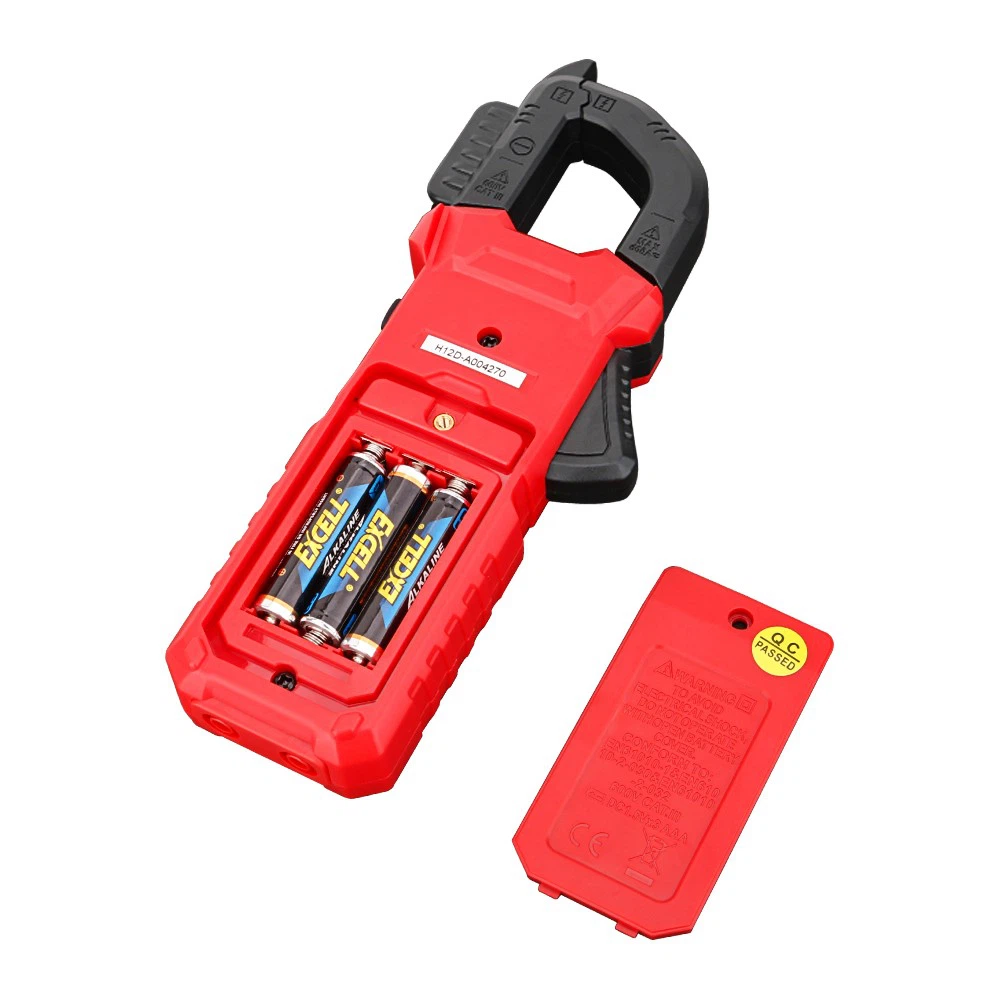
1. Initial measurement and judgment. Firstly, cut off the power of the leakage circuit in the distribution room (box). After confirming that there is no voltage, remove the three-phase fuses of circuit A, B, and C and disconnect the neutral wire (N) (if there is no fuse, disconnect the circuit, including the neutral wire, and mark the phase sequence of the neutral wire and other phase wires). Connect four wires in parallel, take any phase of the live wire and send it to power, so that all four wires are energized with a single flame. At this time, high and low voltage clamp ammeters can be used to measure the four wires separately. If the current value displayed on the Gan line is high, while the values on the other three lines are low or zero, it indicates that a serious leakage fault has occurred with the high current value. If there are significant readings in all four line measurements, it indicates that each phase has varying degrees of leakage. Regardless of the situation, gradually locate the leakage fault point according to the principle of increasing the current value first and then decreasing it.
2. Confirm the first shot again. After confirming the leakage fault phase at the beginning of the distribution room (box), use an insulated rod clamp ammeter to confirm the severe leakage fault phase with a large value again on the * * base output pole, and firmly remember the fault phase. Measure and search gradually towards the receiving side along the fault phase.
3. Search for T-branch. When encountering the measurement and search of T-shaped branch lines, use the T-shaped branch pole as a reference to measure the main line A1 point (in the direction of the power receiving side) first, and then measure the branch line A2 point. If it is measured that the leakage value of the A1 main line measurement point is large, while there is no leakage display at point A2. This indicates that the leakage fault point is still in the later section of the main line, not on the T-shaped branch line.
4. Search for the cross branch. When encountering a cross branch line measurement and search, use the cross branch pole as a reference and first measure point A1 of the main line (in the direction of the power receiving side). If there is no leakage display, it indicates that the fault point is at point A2 (branch line "ten" side) or point A3 (branch line "one" side). If there is leakage current at both points A2 and A3, it indicates the presence of multiple grounding faults. The principle of gradually finding the leakage fault point based on the current value from high to low should be followed. By following this process and progressing step by step, one can quickly locate the serious leakage fault point or user. This method is also very fast and accurate for searching for electricity theft in one area at a time.