Inspection of electric soldering iron after welding
After the welding is completed, it is necessary to check for solder leaks, faulty soldering, and short circuits of components caused by solder flow. False soldering is difficult to detect, so tweezers can be used to clamp the component pins and gently pull them. If shaking is found, repair welding should be carried out immediately
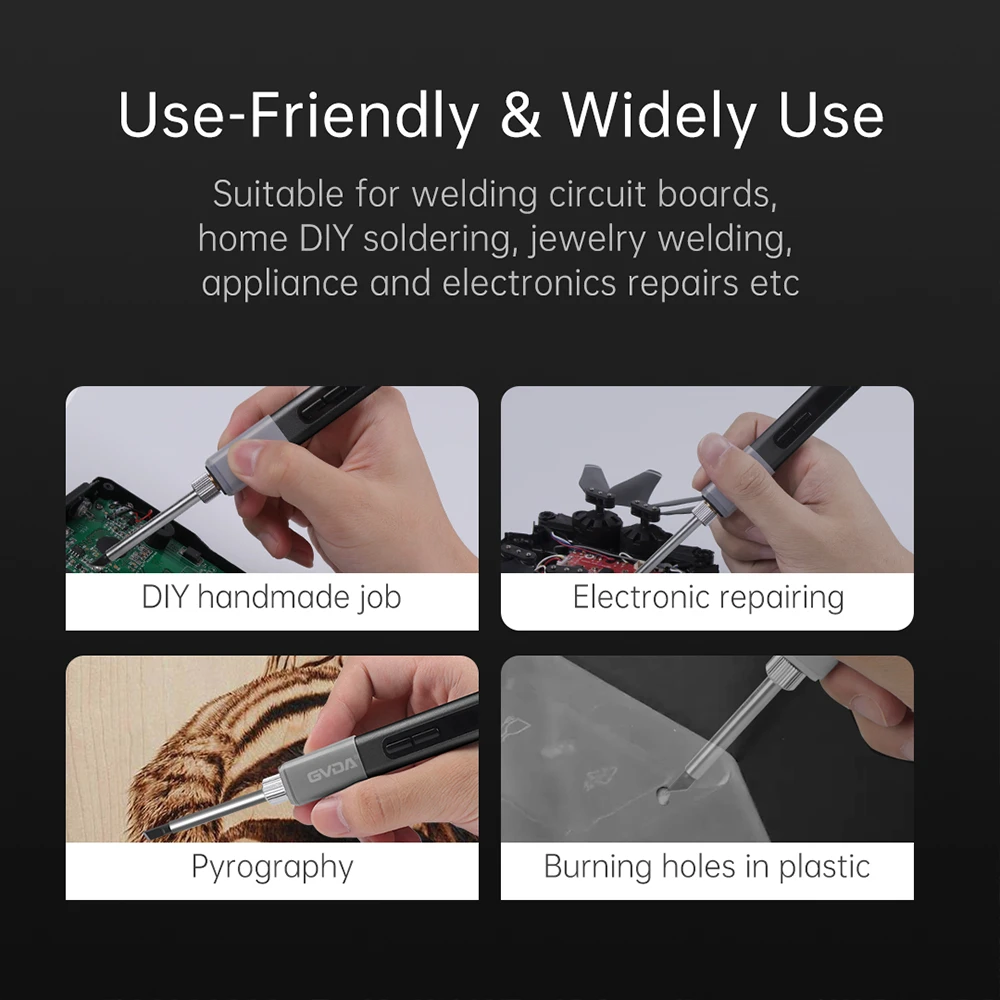
Electric soldering iron is the most commonly used tool in electronic welding, which converts electrical energy into thermal energy to heat and weld the welding point. The success of electric soldering iron largely depends on how well it is controlled. Therefore, from a certain perspective, the use of electric soldering iron relies on a sense of technique.
Generally speaking, the higher the power and heat of an electric soldering iron, the higher the temperature of the soldering iron head. It is sufficient to use a 20W internal heating electric soldering iron for the welding of general transistors and integrated circuit electronic components. Excessive power can easily burn out the components, as diodes and transistors can burn out when the node temperature exceeds 200 ℃. However, in the production of biliary machines mainly based on ceiling welding, the power of the electric soldering iron is higher, which can be selected from 35W-45W or even higher.
It is worth noting that when welding the circuit, the time should not be too long or too short, as it can easily be damaged. However, if the time is too short, the solder cannot fully melt, resulting in uneven and unstable solder joints, and may also cause false soldering. Generally, the most appropriate time must be completed within 1.5-4s.
Solder is a fusible metal, and the most commonly used is usually solder wire. The function of soldering is to connect the component pins with the connection points of the printed circuit board, and the selection of soldering has a significant impact on the welding quality. The most commonly used solder wire nowadays is usually rosin containing solder wire, but it is also quite meticulous when subdivided, among which the silver containing solder wire that is truly free of moisture is of course top-notch.
Another thing worth mentioning is the solder absorber, which is very practical for beginners. When using an electric soldering iron for the first time, it is always easy to get solder everywhere. The solder absorber can help you dispose of excess solder on the circuit board. In addition, the solder absorber is very effective and useful when removing multi pin integrated circuit devices. It can suck out all the solder joints, which is completely unnecessary for those who are proficient in using soldering iron. Using soldering iron can completely replace its function, and melting the solder joints can easily remove the components.
Before welding, the welding parts of component pins or circuit boards should undergo pre welding treatment.
Remove the oxide layer from the welding area - a small knife can be made using a saw blade to scrape off the oxide layer on the surface of the metal lead, exposing the metal luster of the pin. Printed circuit boards can be polished with fine gauze paper and coated with a layer of rosin alcohol solution.
Tin plating of components - Tin plating on scraped leads. Dip the lead in a solution of rosin alcohol, press the hot soldering iron tip with tin onto the lead, and rotate the lead. You can evenly coat the leads with a thin layer of tin. Before welding the wire, the insulation skin should be peeled off and the above two treatments should be carried out before formal welding can be carried out. If the wire is made of multiple strands of metal wire, it should be twisted together after polishing, and then tinned.