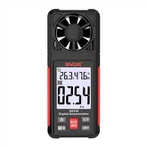
Introduction to Some Functions of a Digital Multimeter
A general digital multimeter can measure DC current, DC voltage, AC current, AC voltage, resistance, and audio level. Some can also measure AC current, capacitance, inductance, and some parameters of semiconductors. The basic principle is to use a sensitive magneto electric DC ammeter (microampere meter) as the meter head. When a small current passes through the meter head, the multimeter will have a current indication.
A digital multimeter can not only be used to measure the resistance of the object being measured, but also to measure AC and DC voltages. Even some multimeters can measure the main parameters of transistors and the capacitance of capacitors. Fully mastering the usage of a multimeter is one of the most fundamental skills in electronic technology. Common multimeters include pointer multimeters and digital multimeters. A pointer type multimeter is a multifunctional measuring instrument with the meter head as the core component, and the measured values are read by the pointer on the meter head. The measured values of a digital multimeter are directly displayed in digital form on the LCD screen, making it easy to read. Some even have voice prompts. A multimeter is an instrument that uses a common meter head and integrates a voltmeter, ammeter, and ohmmeter.
The DC current range of a multimeter is a multi range DC voltmeter. The parallel connection of a closed circuit voltage divider resistor in the meter head can expand its voltage range. The DC voltage range of a multimeter is a multi range DC voltmeter. Connecting a voltage divider resistor in series with the meter head can expand its voltage range. The corresponding range varies depending on the voltage divider resistor. The head of a multimeter is a magneto electric measuring mechanism, which can only measure AC power by converting AC power to DC power through diodes.