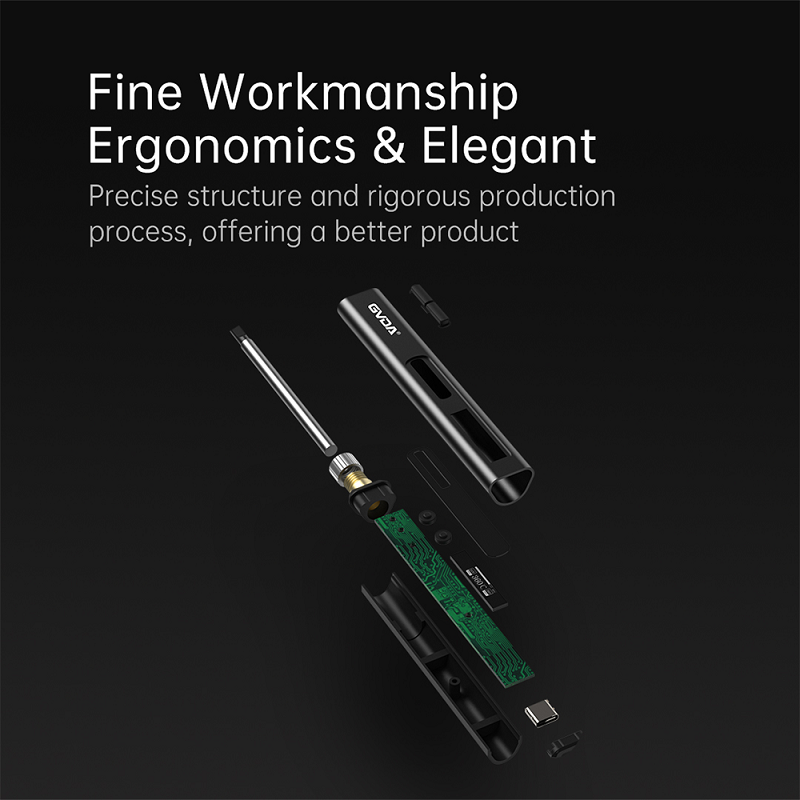
Introduction to the method of soldering wires with electric soldering iron
Before using a new soldering iron, polish the tip of the soldering iron with fine sandpaper, heat it up with electricity, dip it in rosin, and touch the solder wire with the blade of the tip of the soldering iron, so that the tip of the soldering iron is evenly coated with a layer of tin. Doing so can facilitate soldering and prevent surface oxidation of the soldering iron tip. If the old soldering iron tip is severely oxidized and blackened, steel can be used to remove the oxide on the surface to expose the metallic luster, and then re-tinned before use
The electric soldering iron should use 220V AC power supply, and special attention should be paid to safety when using it. The following points should be carefully done:
(1) It is best to use a three-pole plug for the electric soldering iron plug. Make sure the case is properly grounded.
(2) Before use, carefully check whether the power plug and power cord are damaged. And check whether the tip of the soldering iron is loose.
(3) Do not strike hard when the electric soldering iron is in use. To prevent falling. When there is too much solder on the tip of the soldering iron, wipe it off with a cloth. Do not throw it around, so as not to burn others.
(4) During the soldering process, the soldering iron cannot be placed anywhere. When not soldering, it should be placed on the soldering iron stand. Note that the power cord cannot be placed on the tip of the soldering iron to prevent accidents caused by scalding the insulation layer.
(5) After use, the power supply should be cut off in time, and the power plug should be pulled out. After cooling, put the soldering iron back into the toolbox.
Pre-weld treatment
Before soldering, pre-soldering treatment should be performed on the component pins or the soldering parts of the circuit board.
1. Remove the oxide layer on the welding part
A knife can be made from a broken saw blade. Scrape off the oxide layer on the surface of the metal leads to expose the metallic luster of the leads.
The printed circuit board can be polished with fine gauze paper, and then coated with a layer of rosin alcohol solution.
Component tin plating
Tin on scraped leads. After dipping the lead wire in the rosin alcohol solution, press the tip of the hot soldering iron with tin on the lead wire and turn the lead wire. The leads can be evenly plated with a very thin layer of tin. Before the wire is welded, the insulation sheath should be peeled off, and then the above two treatments can be performed before formal welding. If it is a multi-strand wire wire, it should be twisted together after lighting, and then tinned, scraped off the oxide layer and evenly coated with a layer of tin.
Welding Technology
After the pre-welding treatment is done, the welding can be officially carried out.
1. Welding method.
Weld inspection cut short
(1) Hold the electric soldering iron in the right hand. Use needle-nose pliers or tweezers with your left hand to hold components or wires. Before soldering, the electric soldering iron should be fully preheated. Tin should be eaten on the blade surface of the soldering iron head, that is, a certain amount of solder should be brought on.
(2) Place the blade of the soldering iron tip against the solder joint. The electric soldering iron is at an angle of about 60° to the horizontal plane. To facilitate the flow of molten tin from the tip of the soldering iron to the solder joint. The time the soldering iron tip stays at the solder joint is controlled within 2 to 3 seconds.
(3) Lift the tip of the soldering iron. The left hand still holds the component. The left hand can only be released after the tin at the solder joint is cooled and solidified.
(4) Rotate the lead wire with tweezers to confirm that it is not loose, and then use the pliers to cut off the excess lead wire.
2. Welding quality
When welding, it is necessary to ensure that each solder joint is firmly welded and in good contact. To ensure the quality of welding.
(A) The tin point should be bright, smooth without burrs, and the amount of tin should be moderate. Tin and solder are firmly fused. There should be no false welding and false welding.
False soldering means that only a small amount of tin is welded at the solder joint, resulting in poor contact and intermittent on and off. False welding means that it seems to be welded on the surface, but it is not actually welded. Sometimes the lead wire can be pulled out from the solder joint by pulling it out by hand. These two situations will bring great difficulties to the debugging and maintenance of electronic production. Both of these conditions can only be avoided with extensive, careful welding practice.
When soldering the circuit board, be sure to control the time. If it is too long, the circuit board will be burnt, or the copper foil will fall off. When removing components from the circuit board, stick the tip of the electric soldering iron on the solder joint, and pull out the component after the tin on the solder joint melts.
Flux (rosin and solder oil) is the key when soldering. Fresh rosin and non-corrosive solder oil can help you complete the soldering well, and can make the surface clean and beautiful. You can use more flux when you use it