Introduction to the testing principles and methods of illuminance meters
1. Testing principle of illumination
Illumination is the area density of luminous flux received on the illuminated plane. An illuminance meter is an instrument used to measure the illumination on the illuminated surface. It is one of the most commonly used instruments in illumination measurement.
2. Structural principle of illuminance meter
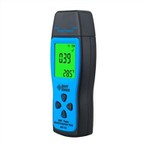
The illuminance meter consists of two parts: a photometric head (also called a light-receiving probe, including a receiver, a V(λ) pair filter, and a cosine corrector) and a reading display.
Measurement steps and methods
In a work room, illumination should be measured at each work location (e.g. desk, workbench) and then averaged. For empty rooms or non-working rooms where the working location is not determined, if general lighting is used alone, usually choose
Measure the illuminance on a 0.8m high horizontal plane. Divide the measurement area into equal-sized squares (or nearly squares), measure the illumination Ei at the center of each square, and its average illumination is equal to the average illumination at each point, that is
Where Eav - the average illumination of the measurement area, lx;
Ei --illuminance at the center of each measurement grid, lx;
N--Number of measuring points.
Illumination uniformity refers to the ratio of the minimum illumination to the average illumination on a specified surface, that is:
In the formula, Emin--refers to the minimum illumination on the measured surface, lx.
In this experiment, the measuring point surface arranged in the room can be the designated surface, and the minimum illumination can be regarded as the minimum illumination value in the measured point.
Measure the side length of each square in the room to lm. A large room can
Where Eav - the average illumination of the measurement area, lx;
Ei --illuminance at the center of each measurement grid, lx;
N--Number of measuring points.
Illumination uniformity refers to the ratio of the minimum illumination to the average illumination on a specified surface, that is:
In the formula, Emin--refers to the minimum illumination on the measured surface, lx.
In this experiment, the measuring point surface arranged in the room can be the designated surface, and the minimum illumination can be regarded as the minimum illumination value in the measured point.
The side length of each square in the room is measured to be lm. For a large room, 2-4 m can be used. Measurement points are arranged along the length center line of long and narrow traffic areas such as walkways and stairs with a spacing of 1-2 m; the measurement plane is the ground level or a horizontal plane 150mm above the ground.
The greater the number of measuring points, the more accurate the average illumination value obtained, but it also takes more time and energy. If the allowable measurement error of Eav is ±10%, the workload can be reduced by selecting the minimum measuring points according to the chamber shape index. The relationship between the two is listed in Table 1. If the number of lamps is exactly equal to the number of measuring points given in the table, additional measuring points must be added.