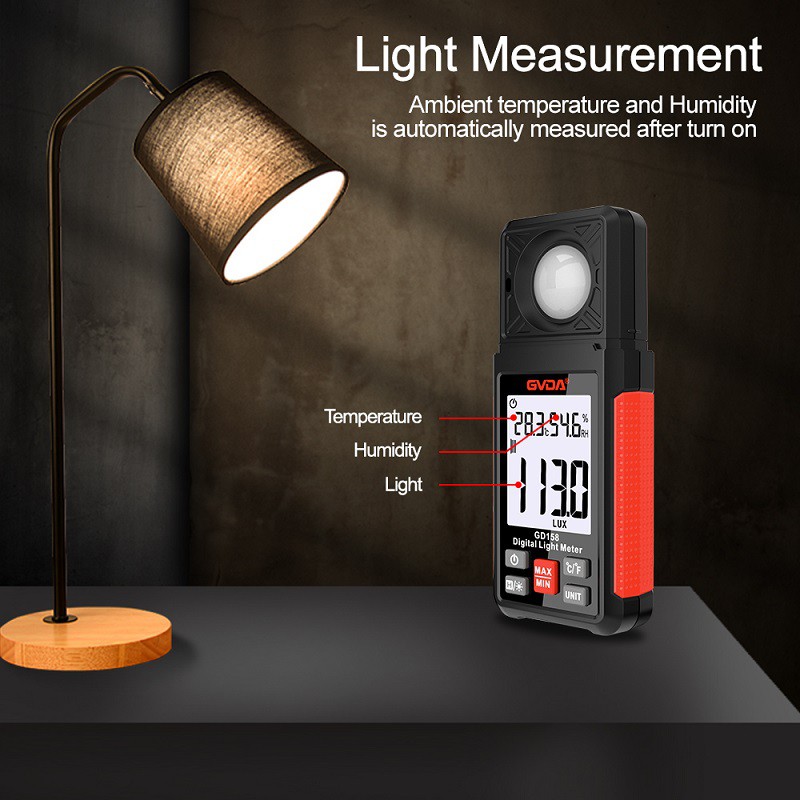
Luxmeter Illuminance Calibration
Calibration principle:
Let's assume that Ls illuminates the photocell vertically and that E=I/r2; we then modify r to obtain the photocurrent value at various illuminations; and we translate the current scale into the illumination scale in accordance with the relationship between E and i.
Calibration method:
Change the distance l between the photocell and the standard lamp while maintaining the working distance of the approximate point light source. Record the ammeter readings at each distance. Calculate the illumination E using the inverse square law of distance E=I/r2, and then calculate the illumination E by This can produce a series of photocurrent values I with varying illumination, and create the calibration curve for the illuminance meter by plotting the relationship between photocurrent I and illumination. Using this information, the illuminance meter's dial can be divided to calibrate the device.
Factors affecting the calibration curve:
Recalibration is required when the photocell and ammeter are replaced; after the illuminance meter has been used for a period of time, the illuminance meter should be recalibrated (generally 1-2 times within a year); high-precision illuminance meters can be calibrated with light intensity standard lamps; expand The calibration range of the illuminance meter can change the distance r, or choose different standard lamps, and choose a small-range galvanometer