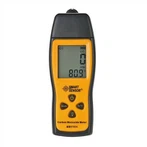
Measuring operation method of coating thickness gauge
Coating thickness gauge is a promising subject with strong theoretical comprehensiveness and great emphasis on practical links. It involves the physical properties of materials, product design, manufacturing process, fracture mechanics and finite element calculation and many other aspects.
In chemical, electronic, electric power, metal and other industries, in order to protect or decorate various materials, coating thickness gauges usually use spraying, non-ferrous metal covering, phosphating, anodizing and other methods. Concepts such as coatings, platings, claddings, claddings or chemically generated films have emerged, which we call "cladding".
The thickness measurement of the cladding has become the most important process necessary for the quality inspection of the finished product by the users of the metal processing industry. It is an essential means for the product to reach the highest standard. At present, the thickness of the coating layer has been generally determined according to the unified international standard at home and abroad. The selection of the method and the instrument of the non-destructive testing of the coating layer is more and more important with the gradual progress of the research on the physical properties of the material.
The non-destructive testing methods for coatings mainly include: wedge cutting method, optical interception method, electrolysis method, thickness difference measurement method, weighing method, X-ray fluorescence method, β-ray reflection method, capacitance method, magnetic measurement method and eddy current measurement law, etc. Most of these methods except the last five have to damage the product or the surface of the product, which is a destructive test, the measurement method is cumbersome and the speed is slow, and it is mostly suitable for sampling inspection.
X-ray and beta-ray reflection methods can be non-contact and non-destructive measurement, but the device is complex and expensive, and the measurement range is small. Due to the presence of radioactive sources, users must comply with radiation protection regulations, which are generally used for thickness measurement of various metal coatings.
Capacitance methods are generally only used for insulating coating thickness testing of very thin electrical conductors.
Magnetic measurement method and eddy current measurement method, with the increasing progress of technology, especially after the introduction of microprocessor technology in recent years, the thickness gauge has taken a big step towards miniature, intelligent, multi-functional, high-precision and practical. The resolution of the measurement has reached 0.1 μm, and the accuracy can reach 1%. It has the characteristics of wide application range, wide measuring range, easy operation and low price. It is the most widely used instrument in industry and scientific research.
The thickness measurement by non-destructive testing method neither damages the coating nor the substrate, and the detection speed is fast, so a large number of detection work can be carried out economically. Measurement method and operation guide of coating thickness gauge The following two kinds of conventional thickness measurement methods are introduced respectively.
Magnetic measurement principle
1. The principle of magnetic attraction thickness gauge
The thickness of the coating can be measured by using a certain proportional relationship between the suction force between the magnetic probe and the magnetically conductive steel and the distance between the two. This distance is the thickness of the coating, so as long as the coating and the base The difference in the permeability of the materials is large enough to allow the measurement. Given that most industrial products are stamped from structural steel and hot-rolled and cold-rolled steel, magnetic thickness gauges are the most widely used. The basic structure of the measuring instrument is a magnetic steel, a tension spring, a ruler and a self-stop mechanism. When the magnetic steel and the object to be measured are attracted, a spring gradually elongates and the pulling force gradually increases. When the pulling force of the steel is greater than the suction force, the pull-down force is recorded at the moment when the magnetic steel is detached, and the coating thickness can be obtained. Generally speaking, according to different models and different ranges and suitable occasions. Within an angle of about 350º, the scale can be used to indicate the thickness of 0~100µm; 0~1000µm; 0~5mm, etc., and the accuracy can reach more than 5%, which can meet the general requirements of industrial applications. The characteristics of this instrument are simple operation, strong and durable, no power supply and calibration before measurement, and low price, which is very suitable for workshops for on-site quality control.
2. Magnetic Induction Principle Thickness Gauge
The principle of magnetic induction is to measure the thickness of the coating by using the magnetic flux of the probe passing through the non-ferromagnetic coating and flowing into the iron substrate. The thicker the coating, the smaller the magnetic flux. Because it is an electronic instrument, it is easy to calibrate, can perform various functions, expand the range, and improve the accuracy. Since the test conditions can be reduced a lot, it has a wider application field than the magnetic suction type.
When the probe around the coil on the soft iron core is placed on the object to be measured, the instrument automatically outputs the test current. The magnitude of the magnetic flux affects the magnitude of the induced electromotive force. The instrument amplifies the signal and then indicates the thickness of the coating. The early products were indicated with a meter, and the accuracy and repeatability were not good. Later, a digital display type was developed, and the circuit design was also increasingly perfected. In recent years, with the introduction of microprocessor technology and electronic switches, frequency stabilization and other advanced technologies, a variety of products have come out one after another, and the accuracy has been greatly improved, reaching 1% and the resolution reaching 0.1µm. The probe is mostly made of mild steel as the conductive core, and the frequency of the coil current is not high to reduce the influence of the eddy current effect. The probe has the function of temperature compensation. Because the instrument has been intelligent, it can identify different probes, cooperate with different software and automatically change the current and frequency of the probe. One instrument can be used with a variety of probes, or the same instrument can be used. It can be said that the instruments suitable for industrial production and scientific research have reached a very practical stage.
The thickness gauge developed by the electromagnetic principle is suitable for all non-magnetic conductive coating measurements in principle, and generally requires a basic magnetic permeability of more than 500. If the cladding material is also magnetic, it is required to have a large enough gap with the magnetic permeability of the substrate (such as nickel plating on steel). The magnetic principle thickness gauge can be used to accurately measure paint coatings on steel surfaces, porcelain and enamel protective coatings, plastic and rubber coatings, various non-ferrous metal plating layers including nickel and chromium, and various anti-corrosion in the chemical and petroleum industry. coating. For film production industries such as photosensitive film, capacitor paper, plastic, polyester, etc., the use of measuring platforms or rollers (steel manufacturing) can also be used to measure any point on a large area.