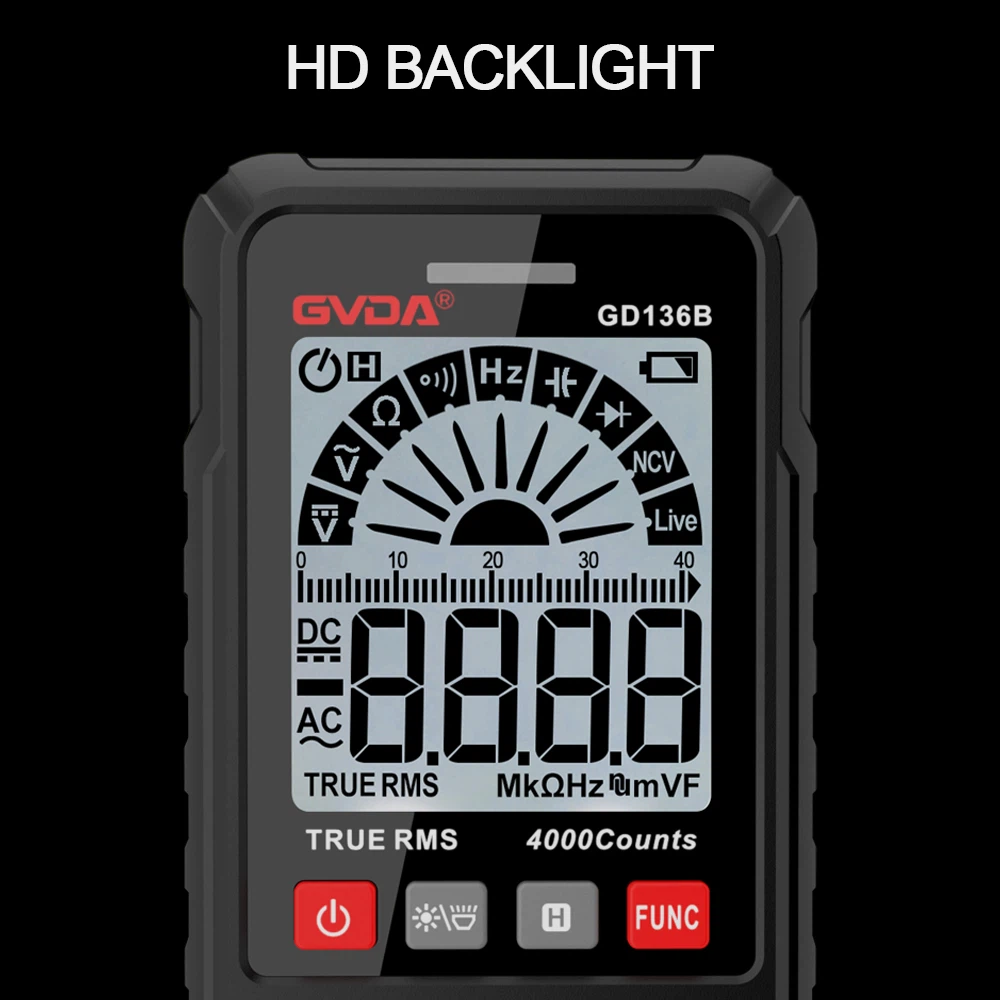
Methods for Determining the Polarity and Verifying the Functional Condition of Diodes Using a Multimeter
1, Polarity discrimination using a multimeter
1. Use a pointer multimeter to determine polarity
The method of using a pointer multimeter to determine the polarity of a diode is as follows.
1) Turn the multimeter function knob to Rx10, RX100, or RX1K gear
2) Pinch the middle part of the diode with your left hand Hold the red multimeter in your right hand Use two black probes to make stable contact with the two electrodes of the diode, and observe whether the probes are deflected.
3) Swap the direction of the diode with your left hand (or swap the red and black probes with your right hand) and retest to observe if the probe is deflected
4) Discrimination, in the above two tests, in the first test mode where the needle deviates The black probe is connected to the positive terminal of the diode, and the red probe is connected to the negative terminal of the diode
Note: This detection method utilizes the unidirectional conductivity of the PN junction inside the diode. The resistance values measured in different gears are different, which also indicates that diodes are not linear components.
2. Use a digital multimeter to determine polarity
The method of using a digital multimeter to determine the polarity of a diode is as follows.
1) Turn the multimeter function knob to the diode position.
2) Pinch the middle part of the diode with your left hand, hold the red and black probes of the multimeter with your right hand, and make stable contact with the two electrodes of the diode. Observe whether the display screen shows any numbers.
3) Swap the direction of the diode with your left hand (or swap the red and black probes with your right hand) and retest to observe if there are any numbers displayed on the screen.
4) Discrimination: In the above two tests, in the first test mode with digital display, the red probe is connected to the positive terminal of the diode, and the black probe is connected to the negative terminal of the diode. The displayed number represents the forward voltage value of the diode
Note: The method of determining the polarity of diode electrodes using a digital multimeter is different from that using a pointer multimeter. The forward voltage drop of low-power diodes is generally around 550 (0.55V), while high-power diodes are generally below 250 (0.25V).
2, Use a multimeter to check the quality of diodes
The common fault phenomena of diodes mainly include:
① Open the way Manifesting as positive Reverse resistance infinite
② Short circuit breakdown, manifested as positive The reverse resistance is very small, which is a common phenomenon.
③ The forward resistance increases
④ The reverse resistance decreases)