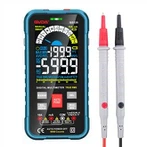
Methods for Measuring High-Current Loads with a Clamp Meter
1. Before measurement, the clamp gauge should be mechanically zeroed;
2. Choose the appropriate range for the clamp gauge: adjust the range from large to small or estimate based on the nameplate value;
3. When using a clamp gauge for small range measurement, if the reading is not yet clear, the measured wire can be wound a few times. The number of turns should be based on the number of turns in the center of the clamp, and the reading=indicated value x range/full deviation x turns;
4. When measuring, the measured wire should be placed in the center of the clamp and the clamp should be tightly closed to reduce errors;
5. After the measurement is completed, the conversion switch of the clamp meter should be placed at the range of .
Simply put, a clamp meter has both numerical and pointer displays. When measuring, estimate the approximate range of the current being measured, pay attention to the selection of the clamp meter range, and try to choose the appropriate range to reduce errors. In addition, try to clamp the wire in the middle of the clamp of the meter. If the measured current is too small, you can wind the wire into multiple pieces and divide the measured value by the number of pieces. Also, be careful not to measure exposed wires to avoid the risk of electric shock.
If it is a clamp meter that can measure voltage and other functions, the probe should be unplugged when measuring current. Furthermore, in three-phase loads, clamping one wire with a clamp measures the current of the current of this wire, while clamping two wires measures the current of the third wire.