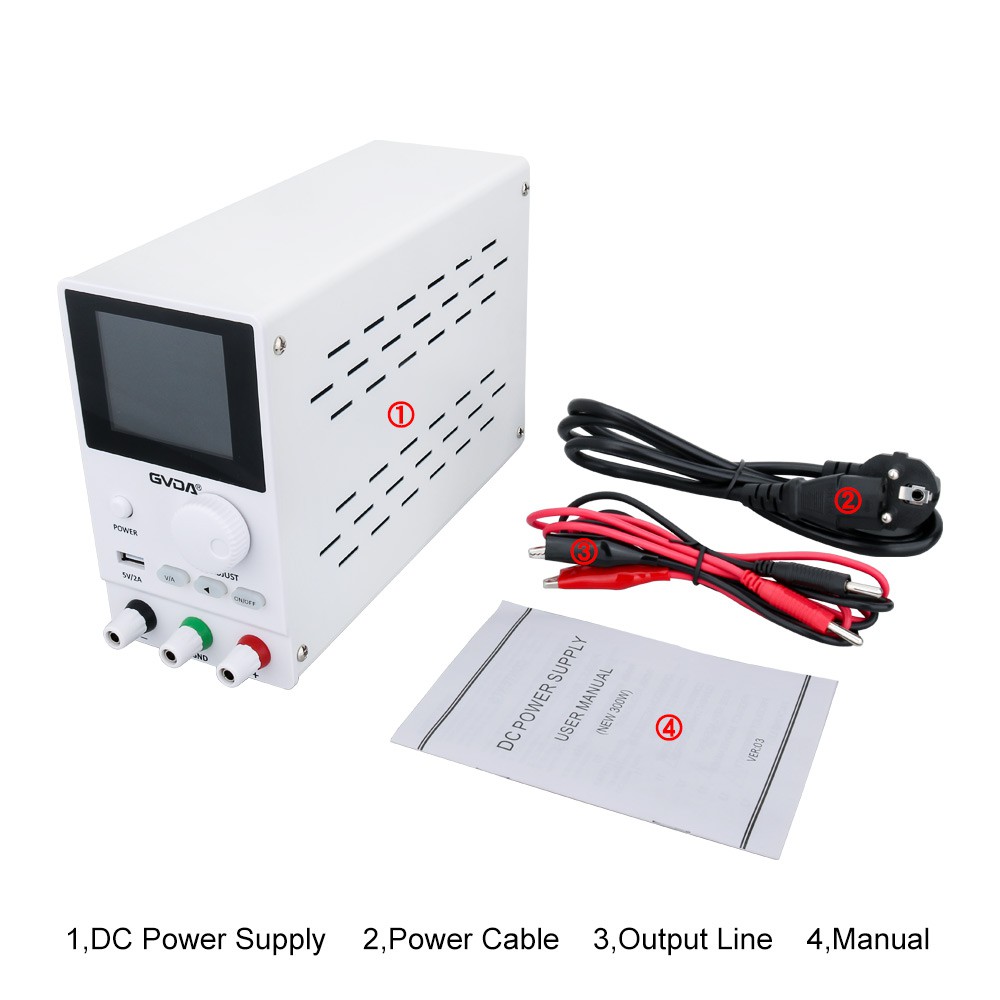
Modifying a Computer Switching Power Supply into a Regulated Power Supply
1. Why Modify a Computer Switching Power Supply into a Regulated Power Supply?
Firstly, it is inexpensive and easy to obtain materials. A second‑hand 200‑watt computer switching power supply costs only about 30 yuan.
Secondly, it has a large output current and can easily output 4–5 amperes. Conventional linear regulated power supplies tend to heat up significantly when the output current is relatively high, making heat dissipation a difficult problem. Switching power supplies, however, have the advantages of high efficiency and low heat generation. They are especially suitable for use as battery chargers and power supplies for car radios.
Thirdly, the ripple is relatively small and can meet general application requirements.
Fourthly, compared with linear regulated power supplies of the same power rating, it is lighter and smaller in size.
There are also disadvantages:
The output voltage stability is inferior to that of linear regulated power supplies.
It produces a certain amount of electromagnetic radiation interference.
It is not easy to achieve adjustable output voltage starting from 0 volts.
2. Methods for Modifying a Computer Switching Power Supply into a Regulated Power Supply
Circuit designs of computer power supplies vary widely, so they will not be described one by one. The general modification ideas are as follows:
Remove the original rectifier, filter and feedback circuits.
Redesign the rectifier and filter circuit according to the required output voltage and current. Special attention should be paid to using Schottky diodes, which should be mounted on the original heat sink with insulating gaskets.
Connect a suitable bleeder resistor in parallel across the filter capacitor, paying attention to its resistance value and power rating.
Select several pins as taps based on the secondary windings of the original transformer. The number of taps and corresponding voltages are determined by the target output voltage. This requires certain technical skills.
Redesign the feedback circuit to allow output voltage adjustment via a variable resistor. It may be necessary to refer to the pin functions of the relevant integrated circuits.
3. Important Notes
It is possible to disassemble the transformer and rewind the coils. However, it is difficult to control the inductance accurately under amateur conditions. Rewinding a single‑ended flyback transformer is particularly challenging, while half‑wave conversion circuits are less demanding on inductance. Sectional winding of the primary coil is recommended.
If designed for multiple outputs, only one output voltage can be accurately regulated.
Design the voltage adjustment circuit such that the output voltage drops to the minimum level if the wiper of the variable resistor becomes disconnected. This prevents a sudden rise in output voltage caused by poor contact of the variable resistor.
Pay close attention to personal safety.
4. Personal Project
I have successfully modified a 200‑watt computer switching power supply into a regulated power supply with an output voltage range of 3V–35V and an output current of 5A.