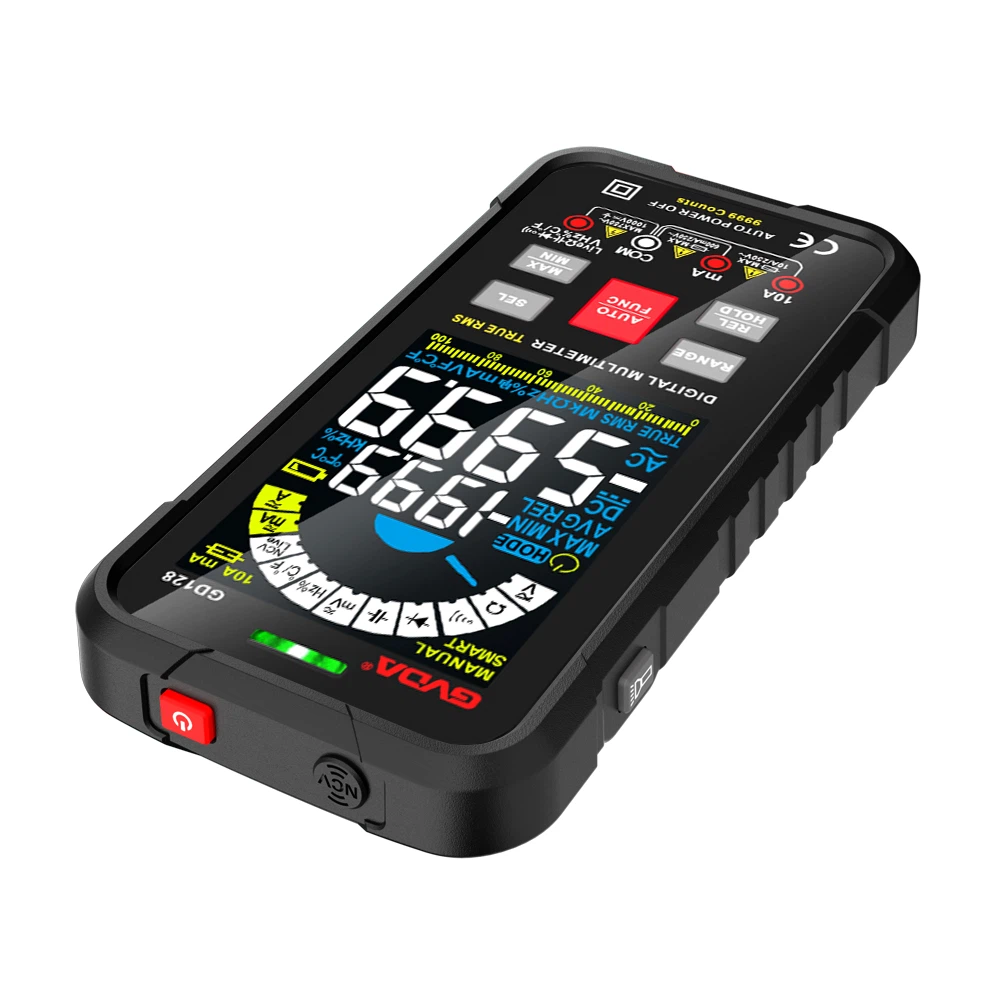
Multimeter three-level tube to measure good or bad
It is very simple to use a multimeter to judge whether the triode is good or bad. Here we take the digital multimeter as an example to introduce the judgment method (the pointer multimeter is too old and has a single function, and now even African electronic enthusiasts are unwilling to use it).
First, let’s talk about the internal equivalent circuit of the triode. As shown in the figure, the left side of the figure is the NPN type triode, and the right side is the equivalent circuit of the NPN type triode. It can be seen that for an NPN transistor, the be junction (the PN junction between the tube base b and the emitter e) and the bc junction (the PN junction between the tube base b and the collector c) are equivalent to two diode connected to the anode. Similarly, the PNP transistor on the right side of the figure can be equivalent to two diodes connected to each other.
It can be seen from the above analysis that to judge whether the triode is good or bad, it is only necessary to use the diode block of the digital multimeter to measure the quality of its be junction and bc junction.
Here we take the commonly used NPN silicon triode as an example (germanium triode is almost no longer used now), when measuring, turn the digital multimeter to the diode block (see the picture), touch the b pole of the triode with the red pen of the multimeter, and then, Use a black test lead to touch the e pole and c pole of the triode respectively. At this time, the reading displayed by the multimeter is the forward voltage drop of the PN junction, and its value is generally between ".500-.700". The b pole and the red test pen are in contact with the e pole and c pole of the triode. At this time, the reading displayed by the multimeter is the reverse voltage drop of the PN junction, and the displayed readings are all "1", so that the triode can basically be considered to be good.
When measuring, if the reading of a certain junction is ".000" or the forward and reverse pressure drops are both "1", then the junction of the tube is damaged and the tube cannot be used.
For a good triode, use the diode block of the multimeter to measure the voltage drop between its c-e poles. Regardless of the forward voltage drop or reverse voltage drop, the reading of the multimeter should display "1". If the reading is displayed as ".000 ", then the tube has been broken down, is bad, and cannot be used. If a certain value is displayed, it means that the penetration current Iceo of the tube is relatively large. Although it can be used, the working stability is poor, so it is not recommended to use it.