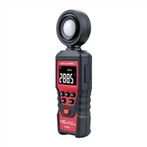
Multimeter to find shorts and opens and leakage
The multimeter is one of the most commonly used tools for electricians, maintenance personnel, electronic engineers, and hardware engineers. It must be indispensable when testing electronic circuits and locating faults. A small multimeter has powerful functions. It can measure resistance, capacitance, diodes, transistors, DC voltage, AC voltage, current, etc. Finding short circuits, open circuits, and leakage is the most basic function of a multimeter. Learning to use a multimeter is easy. Fault do it yourself.
How to Find Short Circuits Using a Multimeter
Short-circuit measurement is very commonly used in electrical maintenance and component fault location. When measuring short-circuit faults, be sure to disconnect the power supply, and remember not to operate with power on. For short-circuit measurement, use the buzzer or ohm gear of the multimeter to measure. It is more intuitive to use the buzzer to measure. When the line is short-circuited, the multimeter will directly "buzz". When buzzing occurs, if you want to know the resistance between the two lines more accurately, you can use the 200Ω range to measure. Use the buzzer to measure, sometimes the actual internal resistance between the two signals is small, it is easy to misjudge, such as relay/contactor coil, the impedance of many relay/contactor coils is less than 75Ω, using the buzzer to measure will be The buzzer thought there was a short circuit, but it wasn't.
Engineers often use the buzzer of the multimeter to quickly find the short-circuit fault point of the line or components, such as measuring whether the resistance and capacitance are short-circuited, whether the diode is reversely broken down, whether the triode is broken down (the base and emitter are generally short-circuited when the triode breaks down), Whether there is a short circuit between the power supply of the integrated circuit chip and the ground, whether there is a short circuit between two pins, etc.