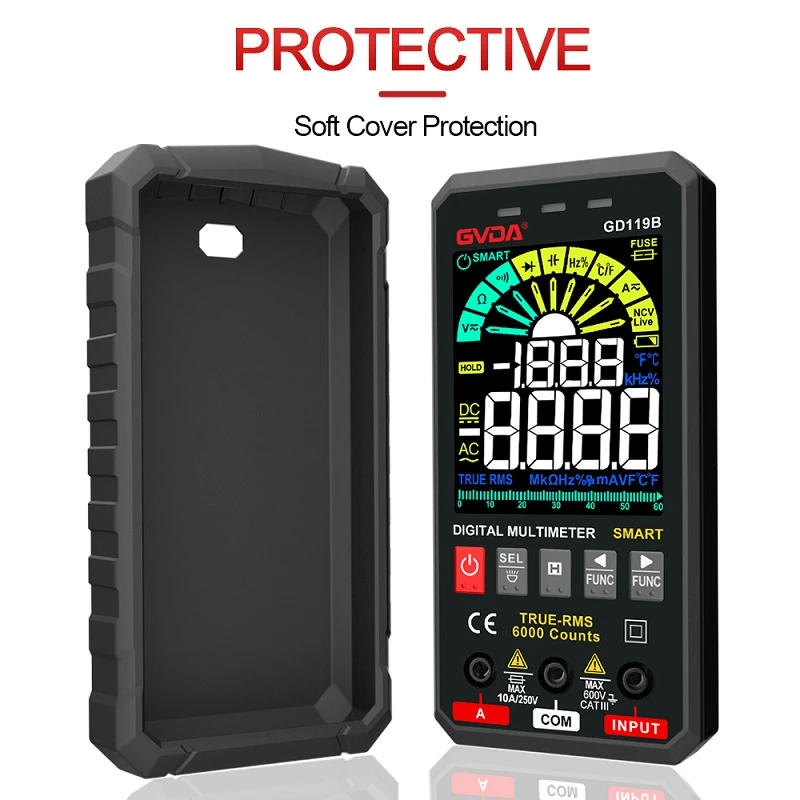
Multimeter to measure the quality of three-phase motor
First, use a multimeter to measure the DC resistance of the three-phase winding. [In fact, the resistance of the winding is very small, and we can basically see the size of the ordinary meter. Unless it is a small motor, just check if it is connected.]
Second, if the three-phase windings are all connected, then use one wire of the megger to connect the motor shell, and the other wire to measure whether the resistance of the three-phase windings to the ground is normal, [the minimum resistance value should not be lower than 0.5 megohms]
Third, if the resistance of the three-phase windings to ground is normal, the last step is to measure the insulation resistance between phases. You connect one wire of the meter to the terminal of one phase winding, and the other to the other two wires. Column, [be careful not to connect two at the same time, connect them separately] After the measurement, measure the windings of the other two phases by swapping the meter wires respectively [the process of measuring between phases is only to measure the upper or lower 3 binding posts, the resistance value Not less than 0.5 megohms].
Clamp one of the two test leads of the shaker on the terminal block of the junction box, and the other on the shell, shake the handle of the shaker evenly, and the reading obtained is the insulation resistance of the motor to ground, generally around 200K ~ 2M is qualified .
Clamp the two test leads of the shaker on the terminals of different phases of the junction box respectively, shake the handle of the shaker evenly, and the reading obtained is the insulation resistance between the phases of the motor. Generally above 100K is qualified.
Why can't the motor be measured with a multimeter, and a shaker must be used?
Because the power supply used for measuring resistance in the multimeter is up to 9V, and the motor works under the AC voltage of 220V or 380V, and its pulse peak wave reaches more than 500 volts. The power supply voltage of the megohmmeter (shaking meter) is 500V. As long as the leakage current between phase and phase and between phase and ground of the coil is weak (including capacitive current) under the voltage of 500V, the motor is qualified.
Ordinary multimeters can only measure tens of thousands of ohms of resistance (the pointer is most accurate within the range of 1/3-2/3 of the dial), use it to measure resistances of megohms, you don't even notice if the pen is moving (When the multimeter measures resistance, its scale is uneven, hundreds of thousands of ohms only occupy a small position on the right side of the dial).
1. The value of the multimeter flashes, which is not as sure as shaking the meter. Therefore, when repairing the motor, first use a multimeter to estimate, first measure, whether the three-phase resistance is balanced, and use a shaker to remove the coil.
2. The multimeter mainly checks whether the wire is disconnected and the coil is burned. Shake the meter to measure the phase-to-phase insulation and ground insulation.
Precautions for using the shaker
Megohmmeter, also known as shaking table. It is an instrument used to measure the insulation value of electrical equipment such as lines, cables, motors, etc. Its resistance unit is megohm (MΩ), so it is named megger. It consists of two parts, the hand-cranked DC generator and the gauge head.
It generally has three voltage classifications: DC500V, DC1000V, and DC2500V. Our practitioners engaged in civil and 380v industrial lines generally use DC500V megohmmeters.
We should pay attention to the following items when using the megohmmeter:
1. The megohmmeter should be placed horizontally when used;
2. The megohmmeter with the corresponding voltage level should be reasonably selected according to the voltage level of the equipment to be tested, and it is not allowed to be too high or too low;
3. When turning the megohmmeter, the hand-crank speed should reach 125r/min from slow to fast, and keep reading for more than 1min;
4. For the cables or motor windings that have been measured, they must be short-circuited and discharged before they can be touched.