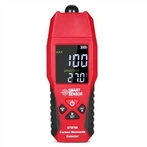
The capacitance reading on the multimeter fluctuates regularly.
Either the circuit is unstable, or the multimeter is dying
The refresh rate displayed by the digital multimeter is about 3 times per second, so it is normal to change. But if it jumps wildly, it is wrong, and the possible reason is that the contact is not good. Generally, it is the test lead and the circuit under test, or the test lead and the multimeter itself, and it is also possible that the multimeter jack is not well welded, the multimeter switch is in contact, the battery is insufficient, and so on.
The steps to test the quality of capacitors with a digital multimeter are as follows:
1. To determine the polarity, first adjust the multimeter to the 100 or 1K ohm range. Assume that one pole is positive, connect the black test lead to it, and connect the red test lead to the other pole. Write down the resistance value, and then discharge the capacitor, that is, let the two poles Contact, and then change the test lead to measure the resistance. The black test lead with a large resistance value is connected to the positive electrode of the capacitor.
2. Adjust the multimeter to the appropriate gear of the ohm range. The principle of gear selection is: 1μF capacitors use 20K gears, 1-100μF capacitors use 2K gears, and capacitors larger than 100, μF use 200 gears.
3. Then use the red pen of the multimeter to connect the positive pole of the capacitor, and the black pen to the negative pole of the capacitor. If the display increases slowly from 0, and finally displays the overflow symbol 1, the capacitor is normal. If it always shows 0, the capacitor is short-circuited internally. If 1 is displayed, the capacitor is internally disconnected.