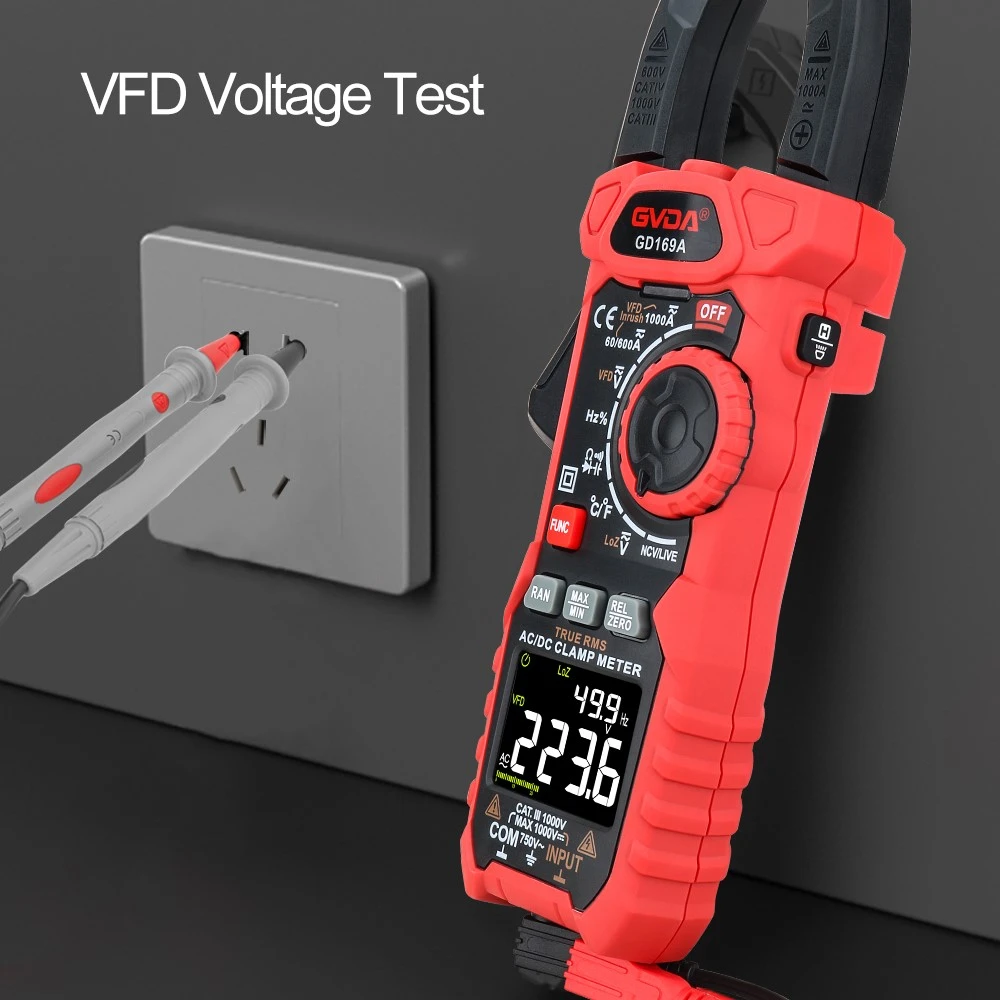
Nine Methods for Using Clamp Meters
① Read the user manual carefully before use and confirm whether it is an AC-only or AC/DC dual-purpose clamp meter. Select the clamp ammeter correctly according to the type of current and voltage class of the circuit under test.
② Inspect the appearance of the clamp ammeter, the closing condition of the jaws and the meter movement before use. If the pointer is not at zero, perform mechanical zero adjustment.
③ Estimate the magnitude of the current to be measured before measurement and select the appropriate range. If the current value cannot be estimated, start with the maximum range and then switch to a smaller range for an accurate reading. Do not measure large currents on the small current range, or the instrument may be damaged.
④ Since clamp ammeters have relatively low inherent accuracy, the following method can be used for small current measurement: wrap the test wire several turns and place it inside the jaws. The displayed reading is not the true value; the actual current equals the meter reading divided by the number of turns.
⑤ The jaws of the clamp meter must close tightly during measurement. If noise occurs after closing, open and re-close the jaws. If the noise remains, check whether the contact surfaces of the magnetic circuit are clean and wipe away dust and dirt.
⑥ When measuring the current of a conductor, place the tested conductor at the center of the jaw window.
⑦ The voltage of the circuit under test shall not exceed the rated value marked on the clamp meter; otherwise, earth faults or electric shock hazards may occur.
⑧ When measuring the motor current, each phase can be measured individually, or three phases can be measured together, in which case the reading should be zero. If two phase conductors are clamped, the reading corresponds to the current of the third phase. The measured phase currents can be used to judge whether the motor is overloaded, whether there is an internal motor fault or supply voltage abnormality, and whether the three-phase current unbalance exceeds the limit of 10%.
⑨ Open the jaws after reading, withdraw the tested conductor, and set the selector switch to the highest current range or the OFF position.