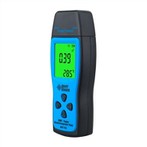
Operating Precautions of Handheld Laser Rangefinders
For DISTO and other handheld laser rangefinders, distance measurement relies on laser. The pulsed laser beam is a monochromatic light source with highly concentrated energy. Therefore, do not look directly into the emission aperture with your eyes during operation, and avoid viewing smooth reflective surfaces through the aiming telescope to prevent eye injury. Measurements must be performed in accordance with the safety operating specifications stated in the instrument manual. During field measurement, never point the instrument's emission aperture directly at the sun, otherwise the photosensitive components of the device may be burned out.
Taking the DISTO instrument as an example, the above text briefly introduces some of its measurement functions. Handheld laser rangefinders manufactured by different brands have slight differences in function keys. Nevertheless, by carefully reading the user manual, users can fully leverage handheld laser rangefinders for building area measurement and other precision engineering surveys.
A laser rangefinder is an instrument that accurately measures the distance to a target using laser light. During operation, it emits a thin laser beam toward the target. A photoelectric element receives the laser beam reflected by the target, and a timer measures the time taken for the laser beam from emission to reception to calculate the distance from the observer to the target. Laser rangefinders are lightweight, compact, simple to operate, fast and accurate. Their measurement error is only one-fifth to one-hundredths of that of other optical rangefinders.
Principles: ① Principle of infrared ranging or laser ranging The ranging principle basically boils down to measuring the round-trip time of light travelling to the target. The distance D is then calculated using the speed of light c =299792458 m/s and the atmospheric refractive index n. Since direct time measurement is difficult, the phase of continuous waves is usually measured; instruments of this type are known as phase-shift rangefinders. There are also pulse rangefinders, and a typical model is the WILD DI-3000.
It should be noted that phase measurement does not measure the phase of infrared or laser light itself, but the phase of the signal modulated onto the infrared or laser beam. Handheld laser rangefinders used in the construction industry for housing surveys operate on this same principle.
② The measured object plane must be perpendicular to the light beam High-precision ranging usually requires the use of a total reflection prism. However, rangefinders for building measurement can perform measurements directly by reflection off smooth walls. This is mainly because the measurement distance is relatively short, and the reflected light signal has sufficient intensity. Therefore, the beam must strike perpendicularly; otherwise, the return signal will be too weak to obtain an accurate distance.
③ Measurement on surfaces with diffuse reflection is available Generally, measurement is feasible. In practical engineering, thin plastic boards are used as reflecting surfaces to tackle severe diffuse reflection issues.
④ Ultrasonic ranging has relatively low accuracy and is seldom used.
⑤ Laser rangefinders can achieve an error of 1 mm, suitable for various high-precision measurement applications.