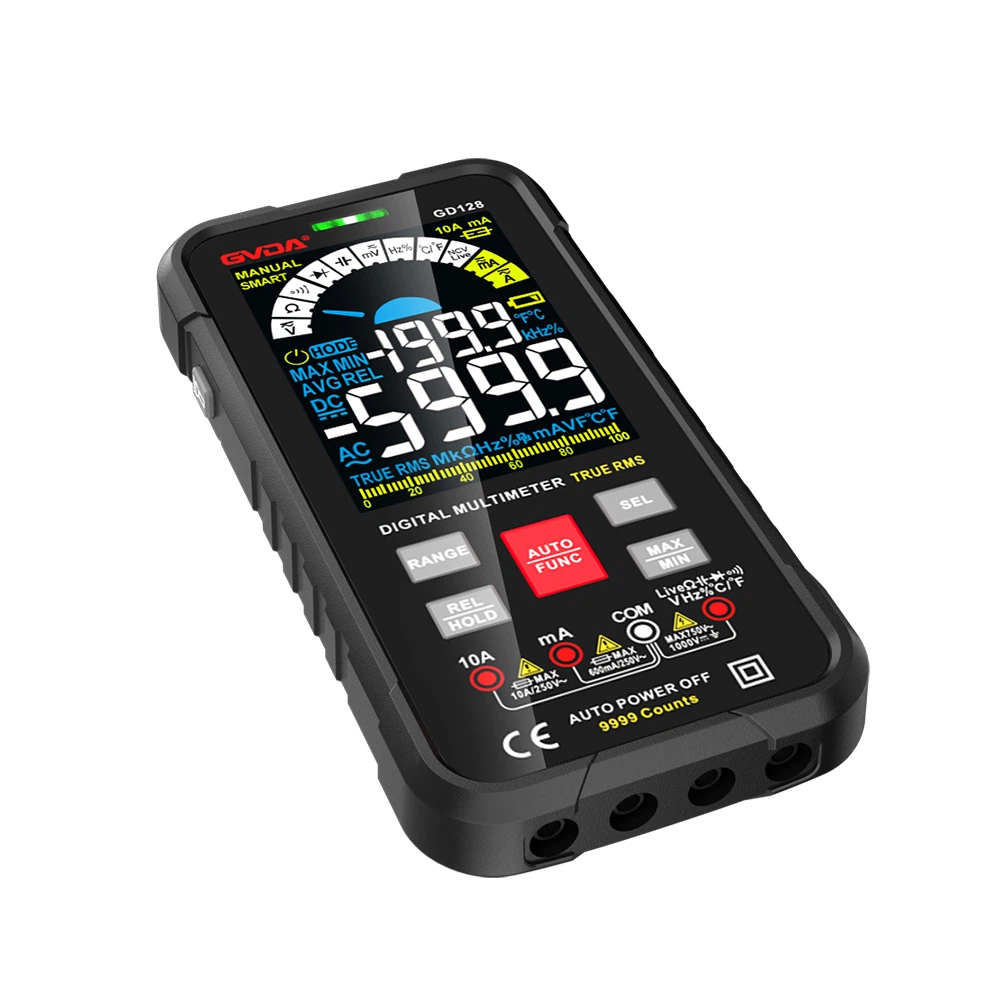
Optical Fiber Test Parameters and Test Procedures for the Multimeter
After the fiber optic cabling system is installed, it is necessary to test the transmission characteristics of the link. The most important test items are the attenuation characteristics of the link, the insertion loss of the connector, and the return loss. Below we briefly introduce the measurement of key physical parameters of optical fiber cabling and the troubleshooting and maintenance of the network.
1. Key physical parameters of optical fiber links
attenuation:
1. Attenuation is the reduction of optical power during the transmission of light along the optical fiber.
2. Calculation of the total attenuation of the optical fiber network: fiber loss (LOSS) refers to the ratio of the power Powerout at the output end of the fiber to the power Powerin when it is launched into the fiber.
3. The loss is proportional to the length of the fiber, so the total attenuation not only shows the fiber loss itself, but also reflects the length of the fiber.
4. Optical fiber loss factor (α): In order to reflect the characteristics of optical fiber attenuation, we introduce the concept of optical fiber loss factor.
5. Measure the attenuation: Because the optical fiber is connected to the light source and the optical power meter will inevitably introduce additional loss. Therefore, the setting of the test reference point of the tester (that is, the setting of zeroing) must first be carried out during on-site testing. There are several methods for testing reference points, which are mainly selected according to the link object to be tested. In the optical fiber cabling system, since the length of the optical fiber itself is usually not long, more attention will be paid to the connection in the test method. The method is even more important on the tester and test jumper.
Return loss: Reflection loss is also called return loss. It refers to the decibel number of the ratio of the retroreflected light to the input light at the optical fiber connection. The greater the return loss, the better, to reduce the impact of reflected light on the light source and system. Impact. The way to improve the return loss is to try to process the end face of the optical fiber into a spherical or oblique spherical surface is an effective way to improve the return loss.
Insertion loss: Insertion loss refers to the decibel ratio of the output optical power to the input optical power after the optical signal in the optical fiber passes through the active connector. The smaller the insertion loss, the better. Insertion loss is measured in the same way as attenuation.
2. Test and measurement equipment for optical fiber network
1. Optical fiber identifier
It is a very sensitive photodetector. When you bend a fiber, some light radiates out of the core. These lights are detected by fiber identifiers, and technicians can identify multi-core fibers or individual fibers in patch panels from other fibers based on these lights. Optical fiber identifiers can detect the state and direction of light without affecting transmission. To make this easier, the test signal is usually modulated at 270Hz, 1000Hz or 2000Hz at the transmitter and injected into a specific fiber. Most of the optical fiber identifiers are used for single-mode optical fibers with a working wavelength of 1310nm or 1550nm. The best optical fiber identifiers can use macrobending technology to identify the optical fiber online and test the transmission direction and power in the optical fiber.
2. Fault locator (fault tracker)
This device is based on a laser diode visible light (red light) source. When the light is injected into the fiber, if there are similar faults such as fiber breakage, connector failure, excessive bending, poor welding quality, etc., the light emitted to the fiber can be used to control the fiber. Faults can be located visually. The visual fault locator transmits in continuous wave (CW) or pulsed mode. Typical frequencies are 1Hz or 2Hz, but can also operate in the kHz range. The usual output power is 0dBm (1Mw) or less, the working distance is 2 to 5km, and supports all common connectors.
3. Optical loss test equipment (also known as optical multimeter or optical power meter)
To measure the loss of a fiber link, a calibrated steady light is launched at one end and the output power is read at the receiving end.
These two devices constitute the optical loss tester. When a light source and a power meter are combined into a set of instruments, it is often called an optical loss tester (also called an optical multimeter). When we measure the loss of a link, one person needs to operate the test light source at the transmitting end and another person uses an optical power meter to measure at the receiving end, so that only the loss value in one direction can be obtained.
Usually, we need to measure the loss in two directions (because there is a directional connection loss or because of the asymmetry of the fiber transmission loss). At this point, technicians have to swap devices with each other and take measurements in the other direction. However, what should they do when they are separated by more than ten floors or tens of kilometers? Obviously, if these two people each have a light source and an optical power meter, then they can measure at the same time on both sides, The current optical fiber test kits used for certification testing can realize bidirectional dual-wavelength testing, such as: Fluke's CertiFiber and FTA fiber optic test kits of the DSP cable test series.