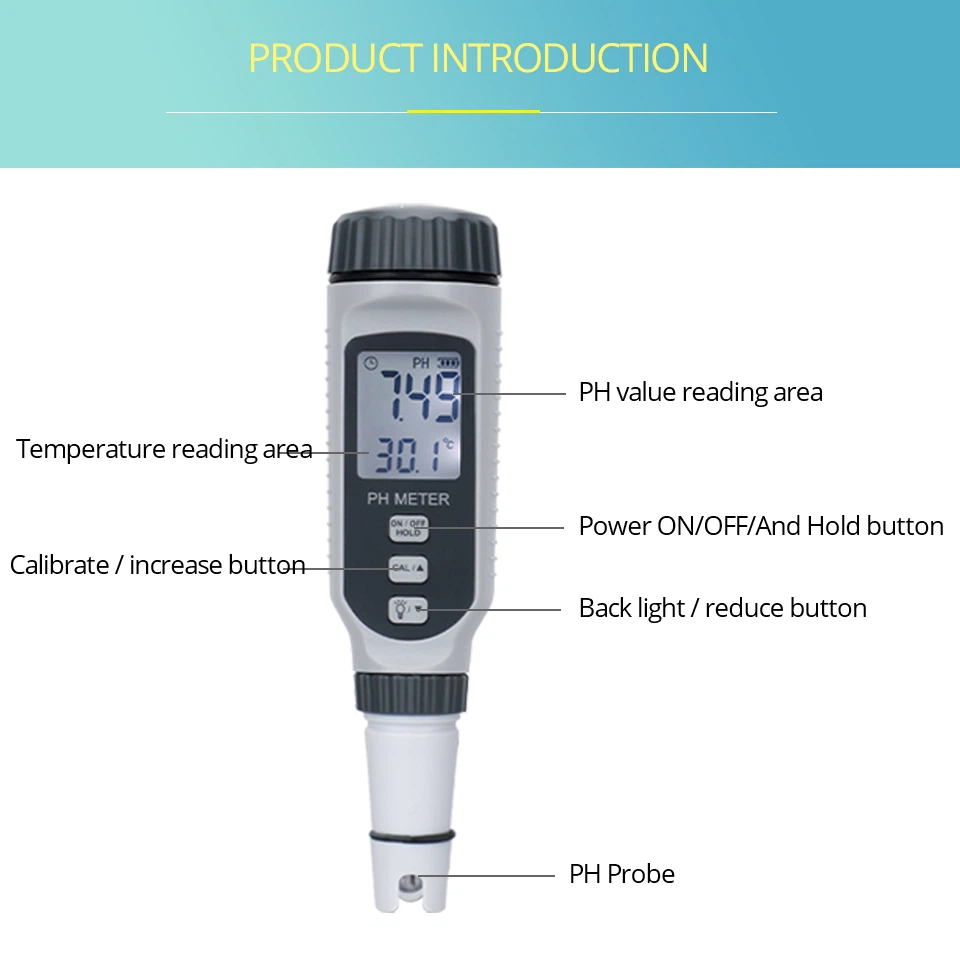
pH meter upkeep and remedies to typical issues!
1. Is the pH value of the two measurements different for the same sample?
Changes in temperature or chemical reactions in the sample itself can cause changes in pH. Therefore, try to keep the temperature consistent and avoid chemical reactions.
2. The same sample is measured on two pH meters at the same time, but the readings are inconsistent?
Due to the different calibration conditions of the two pH meters (such as calibration done at different times), there are differences in the measured values. Therefore, the pH meter should be calibrated at the same time with the same buffer, and then measured at the same time.
3. Why the buffer solution has deteriorated within the validity period and cannot be used?
The validity period of the buffer solution refers to the storage period in the unopened state of use. Once opened and used, the buffer solution is more likely to deteriorate due to the action of various molds in the air.
Note: The used buffer solution must not be poured back into the original bottle!
4. How often does the electrode need to be calibrated?
The frequency of electrode calibration depends on specific conditions such as electrode use, maintenance, sample properties, and measurement accuracy. It is recommended to calibrate once a day, at most no more than once a week. When replacing electrodes or not using for a long time, it must be calibrated before use.
5. How to maintain the pH electrode?
After using the electrode for a period of time, if you find that the slope becomes lower and the response speed becomes slower, you can try the following methods:
① If the measured sample contains protein, the electrode membrane can be cleaned with pepsin/hydrochloric acid washing solution.
② If the measured sample is oily/organic liquid, it can be rinsed with acetone or ethanol.
③ If the junction of the electrode is found to be dirty and black, the junction can be cleaned with mercaptan cleaning solution.
④ Activate the electrode membrane. Activation method: soak in electrode regeneration solution for 30 seconds, then soak in 3mol/L KCl solution for 5 hours.
6. The sample temperature is 10°C. At this time, does the meter display the pH value at 10°C or 25°C?
The acidity meter shows the pH value of the solution at the current temperature. If it is measured at 10°C, the meter displays the value of the solution at 10°C. If it is necessary to obtain a pH of 25°C, the temperature of the solution must be raised/lowered to 25°C, and then Take measurements. The temperature compensation of the pH meter refers to compensating the effect of temperature on the pH electrode, but it cannot compensate the pH value at any temperature to 25°C.
7. Why is it displayed as 7.02 after the electrode is calibrated in the pH7.00 buffer?
At this time, the buffer temperature is around 20°C. Since the pH of the buffer varies slightly with temperature, 7.00 is only the value of the buffer at 25°C, and the value of the buffer at 20°C should be 7.02. The pH meter can automatically compensate the influence of temperature on the buffer to ensure measurement accuracy.
8. How long is the life of the pH electrode?
The life of the pH electrode is related to the nature of the measured sample, the temperature of the sample, the frequency of use, and the maintenance. Under normal use and proper maintenance, the life of the pH electrode is 1 to 2 years.
9. Is the pH meter accurate?
Is the pH meter accurate? The only reliable and easiest method is to use the pH standard buffer solution for verification. Take three pH standard buffer solutions: pH6.86, pH4.00, pH9.18 (preferably freshly prepared and at the same temperature), use pH6.86 for positioning calibration, pH4.00 for slope calibration, and then test pH9. 18. Check whether the pH meter is accurate, and see whether it is qualified or not. If the accuracy is unqualified, you can further judge whether there is a problem with the pH meter or the pH electrode.